
Last updated: May 24, 2026
In Brief
Planetary Education
Think planetarily, act locally — and empathically.
A transdisciplinary framework for educating human beings in an age of planetary change.
Planetary Education equips learners to understand Earth as a living system, situate themselves within history and culture, navigate complexity, and participate in the creation of just, resilient futures.
Earth system literacy Empathy and ethical imagination Agency from local to planetary
Why Education Must Change
Modern education was largely built for an age of industrial expansion and national development. It assumed stable climates, distant horizons, and the primacy of economic growth. Those assumptions no longer hold.
Learners now face climate disruption, biodiversity loss, technological acceleration, democratic strain, and deep global interdependence. The generation entering school today will live through disproportionate climate exposure compared with any generation before it. They will inherit decisions already made and consequences already set in motion.
UNESCO’s Education for Sustainable Development framework (ESD for 2030) recognises this as a civilisational challenge, not a curricular add-on. The OECD’s Learning Compass 2030 centres learner agency, co-agency, and wellbeing rather than narrow content transmission. The IPCC documents that children and youth face compounding risks across every dimension of their lives.
The world changed. Education must change with it.
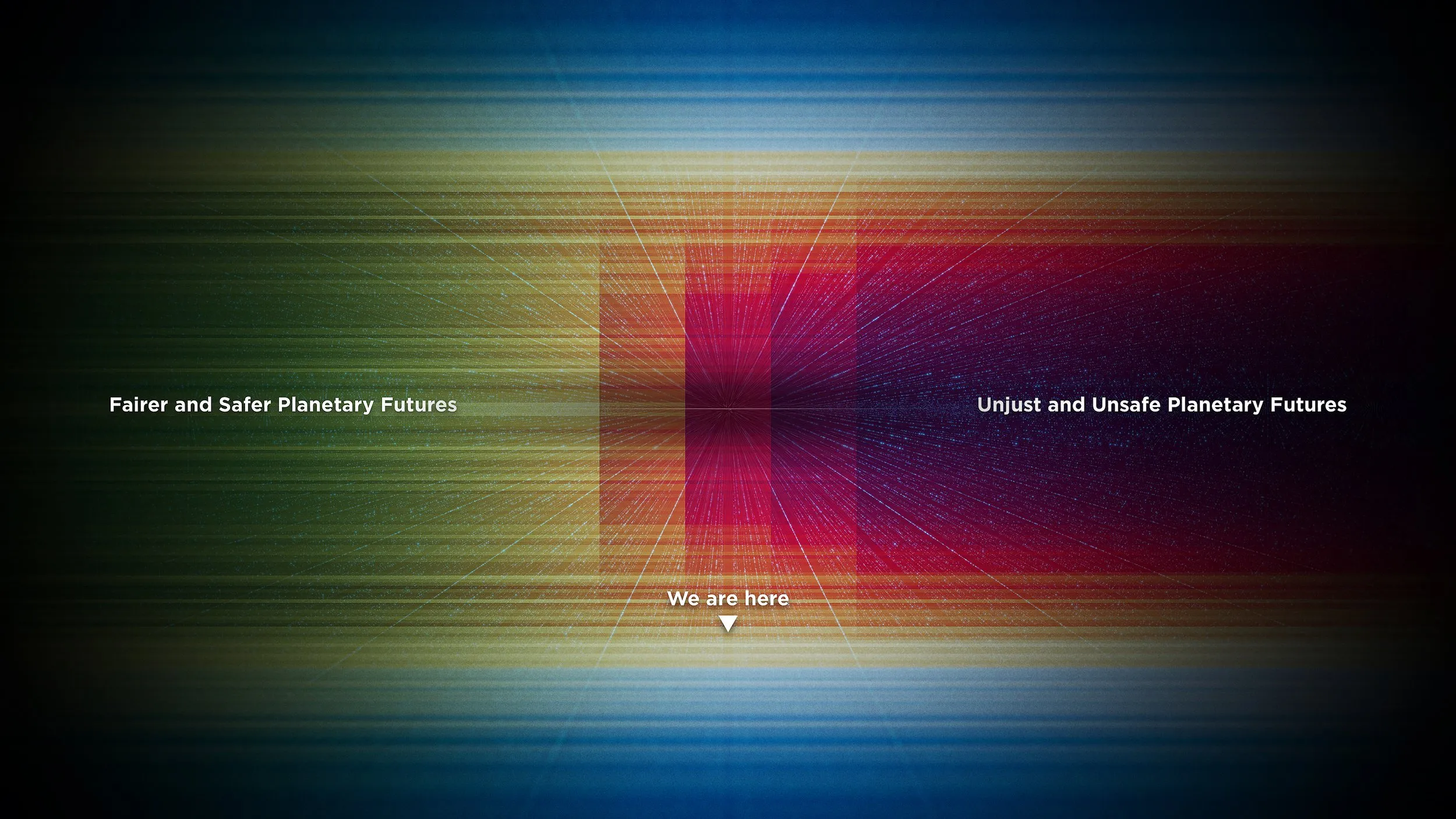
Re-interpretation of warming stripes by Dr. Ed Hawkins showing five Shared Socioeconomic Pathways (SSPs) — from sustainable development (left) to fossil-fueled growth (right). Source: Ed Hawkins / Climate Visuals.
What Planetary Education Is
Planetary Education is not another interdisciplinary curriculum. It is an educational framework for the Anthropocene that integrates Earth system literacy, civic imagination, cultural plurality, ethical reflection, and action competence into a coherent architecture.
Its purpose is to help societies raise planetary citizens — people who can think in systems, feel across difference, and act with both urgency and wisdom — without sacrificing scientific integrity, cultural depth, or emotional balance.
Across academic geography and environmental education, scholars have begun naming this kind of work — planetary pedagogies, planetary thinking — as a distinct response to the inadequacies of the disciplinary curriculum. Planetary Education was conceived independently of those debates, and goes further than most: into age-band progressions, curriculum strands, operational tracks, and a working roadmap. But it sits within an emerging convergence — a recognition, on several continents at once, that the inherited architecture of schooling cannot, on its own, prepare learners for what is ahead. The orientation is one of inquiry rather than mastery: not a settled body of conclusions to be transmitted, but the capacity to hold planetary complexity with care, accuracy, and a sense of one’s own embeddedness in it.
The framework stands on a longer pedagogical lineage than these convergences alone. Edgar Morin’s Les Sept Savoirs Nécessaires à l’Éducation du Futur (UNESCO, 1999) gave the canonical case that Earth-identity must become a primary educational aim. Paulo Freire’s insistence that education is never neutral — and his ecopedagogical inheritors, Richard Kahn and Moacir Gadotti — supplies the political-economic axis without which empathy alone is too soft. Stephen Sterling on sustainable education as paradigmatic change, David Orr on ecological literacy, Michael Stone and Zenobia Barlow at the Center for Ecoliteracy, and Arjen Wals on transgressive and transformative learning shape the methodological backbone. And the Indigenous pedagogical traditions — mātauranga Māori in Aotearoa, Albert Marshall’s Two-Eyed Seeing in Mi’kmaw scholarship, ubuntu-grounded curriculum work in Southern Africa, Vandana Shiva’s Earth Democracy in India — are not adornments but co-founders of how Planetary Education must be taught.
The Framework
Planetary Education is built on a dual foundation — Earth and Empathy — extended through a set of core capabilities and oriented toward four outcomes.
Earth and Empathy — the dual foundation of Planetary Education.
Earth engenders a deep understanding of our planet and its life systems — environmental emergencies, planetary boundaries, and the science of stewardship. It cultivates awareness and responsibility toward the preservation of our shared home.
Empathy cultivates the values essential for collaboration and coexistence — intercultural understanding, respect for past and future generations, compassion for all life forms, and a strong sense of justice and equity.
Together, they ground learning in both rigour and care.
Capabilities
These are the transferable competencies that Planetary Education develops across all age bands and subjects:
- Systems thinking — understanding interconnection, feedback, emergence, and delay
- Historical consciousness — situating the present within deep time and human history
- Critical media literacy — evaluating claims, sources, and narratives with discernment
- Ethical reasoning — navigating competing values, responsibilities, and trade-offs
- Intercultural understanding — engaging with diverse worldviews, knowledge systems, and lived experiences
- Futures thinking — imagining, evaluating, and designing possible and desirable futures
- Practical stewardship — translating understanding into care, action, and restoration
Outcomes
The framework orients learning toward four integrated outcomes:
Understanding
Knowing how Earth and human systems work, interact, and change.
Discernment
Evaluating evidence, recognising complexity, and resisting simplification.
Belonging
Feeling connected to place, to community, to other species, and to future generations.
Agency
Acting with purpose — locally and globally — in the face of uncertainty.
The Learner Journey
Learning develops across age bands — from wonder to complexity, from belonging to agency. Each stage builds on the last, introducing concepts at a pace that matches the learner’s intellectual and emotional development.
Wonder and Belonging
Who is Earth? Where do I live? What is weather? What is care? What do other creatures need?
At this stage, learning is sensory, narrative, and relational. Children develop attachment to place and curiosity about the living world through stories, observation, and hands-on encounters with nature.
Patterns and Interdependence
Cycles, habitats, maps, food, fairness, change over time.
Learners begin to see connections — between water and weather, between food and soil, between their community and others. They start asking why things are the way they are, and whether they could be different.
Systems and Consequences
Climate, biodiversity, energy, consumption, media, identity, civic action.
At this stage, learners engage with systems — feedback loops, trade-offs, unintended consequences. They encounter difficult knowledge (inequality, loss, injustice) and develop the emotional and analytical tools to hold complexity without paralysis.
Complexity and Futures
Planetary boundaries, tipping points, governance, economics, technology, justice, scenario building, capstone projects.
Learners engage with the full architecture of planetary challenges and responses. They evaluate evidence, design interventions, navigate ethical tensions, and complete capstone projects that demonstrate both understanding and agency.
Curriculum Strands
Six strands form the intellectual backbone of Planetary Education. They are not subjects — they are lenses that cut across disciplines, from science and history to art and ethics. Each strand develops progressively through the age bands above.
Cosmos and Earth
Big History, Earth systems, planetary processes, the biosphere. From the formation of elements in stars to the carbon cycle beneath our feet.
Life and Interdependence
Ecology, biodiversity, food webs, kinship with life. Understanding that human flourishing depends on the health of the living world.
Humans and Society
Cultures, economies, politics, inequality, institutions. How human societies organise, distribute power, and shape the planet.
Change and Risk
Climate, tipping points, hazards, resilience, uncertainty. Learning to think about cascading change and systemic risk without despair.
Meaning and Values
Ethics, worldviews, indigenous knowledge, intergenerational justice. The questions that science alone cannot answer — and why they matter for the decisions ahead.
Design and Action
Projects, stewardship, communication, restoration, civic participation. Turning understanding into practice — at school, in the community, and beyond.
Climate Education and Futures Literacy
Climate change is not one subject among many. It is the defining context in which today’s learners will live their entire lives. Climate education must therefore be woven through the whole framework — not confined to a single course or unit.
Grounded in Science
Climate education should be grounded in the IPCC’s three working groups:
- The physical science basis — what climate is, how it is changing, and why (WGI)
- Impacts, adaptation, and vulnerability — how people and ecosystems are affected (WGII)
- Mitigation and solutions — what can be done, individually and collectively (WGIII)
This structure ensures that students encounter the full arc: science, consequence, and response. It also ensures that education stays anchored in the most authoritative, non-partisan knowledge base available.
Beyond Diagnosis
But students should not only learn what is going wrong. They should also learn how different societies value nature, how futures are imagined, and how plural visions can be held in dialogue.
This is where the IPBES Nature Futures Framework becomes a powerful pedagogical tool. GLOBAIA’s own exploration of the Nature Futures Framework illustrates how these narratives can be brought to life visually. Rather than presenting a single desired endpoint, it helps learners explore multiple desirable futures for people and nature — structured around three ways of valuing: Nature for Nature, Nature for Society, and Nature as Culture.
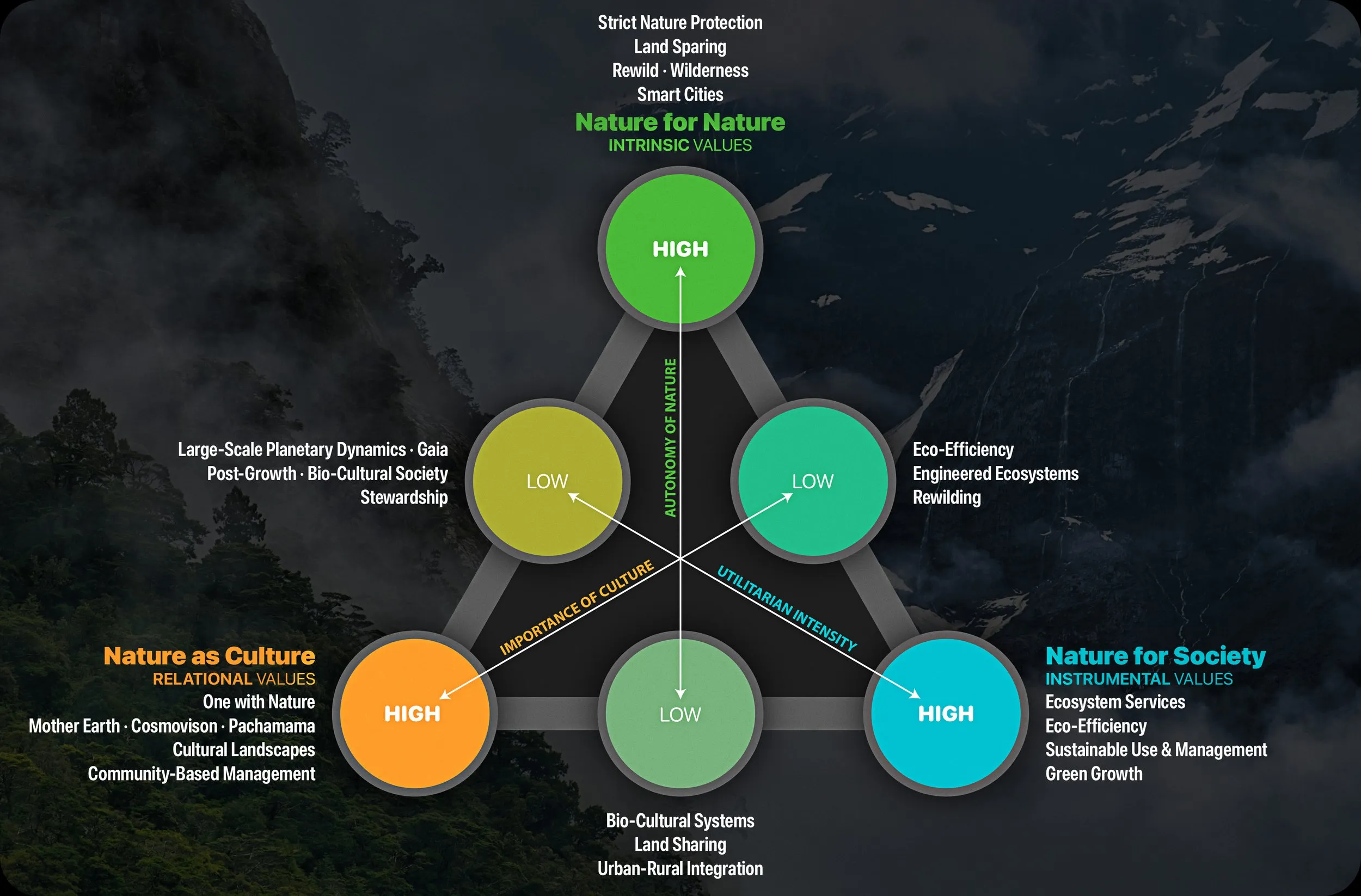
The Nature Futures Framework (IPBES) — six illustrative narratives representing diverse visions of desirable futures for nature and people. References: Duran et al., Sustainability Science (2023); Kim et al., Global Environmental Change (2023).
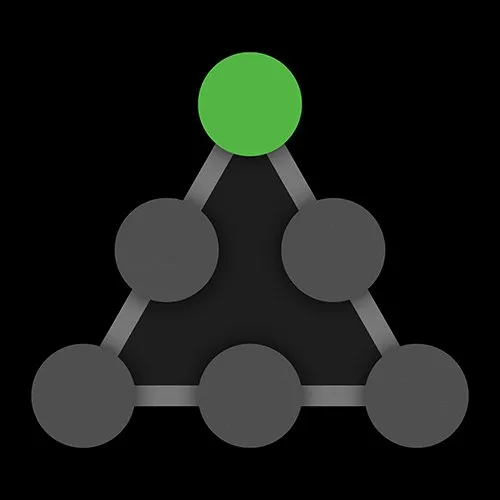
Sanctuary
Large areas set aside for nature to exist undisturbed.
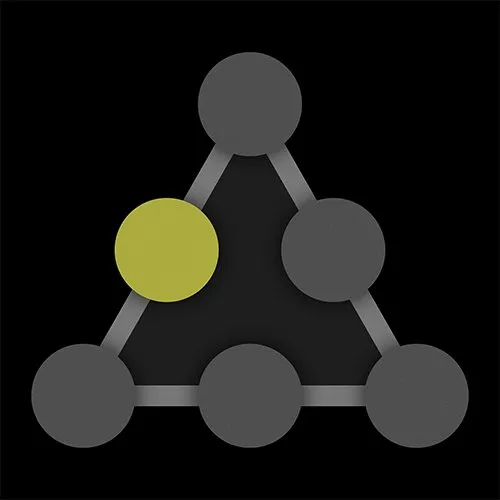
Preserve
Balance between wild and inhabited areas.
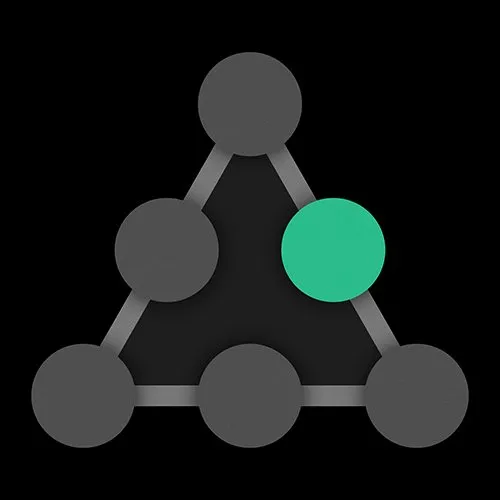
Balance
Both protected and managed for societal benefit.
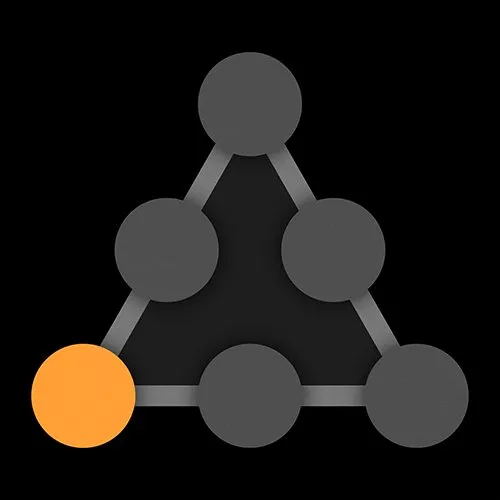
Heritage
Nature and culture inseparable; traditional knowledge central.
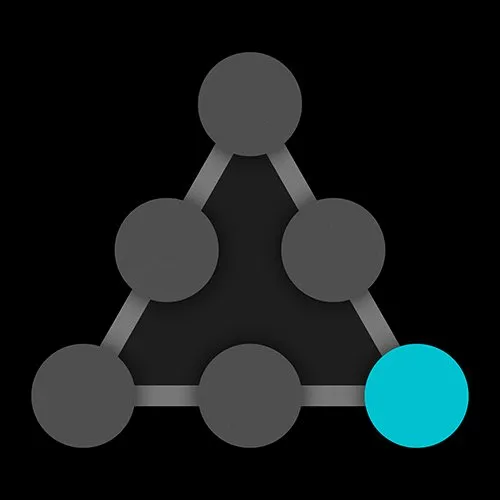
Resource
Managed intensively for the benefits it provides.
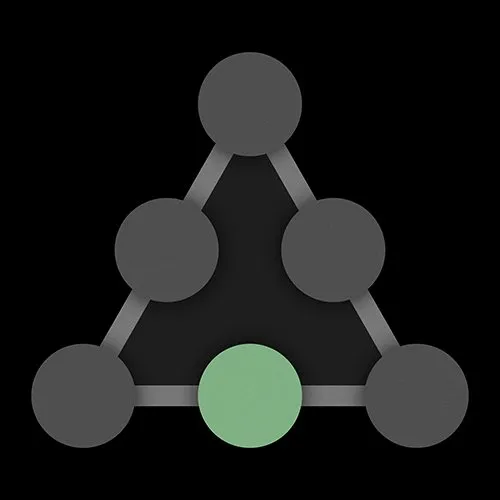
Harmony
Cultural heritage guiding sustainable use.
GLOBAIA is exploring integrative narratives inspired by the Nature Futures Framework — seeking to hold these diverse visions in productive dialogue rather than collapsing them into a single endpoint.
Step into the six narratives and explore them visually — Navigate the Nature Futures Framework →
Planetary, Not Placeless
Planetary literacy must always be grounded in local ecologies, local histories, and local knowledge systems. “Planetary” does not mean abstract, universalising, or culturally flattened. It means understanding the whole through the particular — the Earth system as it manifests in the place where you stand.
In Aotearoa New Zealand, that means meaningful connection to matauranga Maori, to local catchments, species, histories, and communities. Official curriculum guidance in New Zealand already emphasises local curriculum design and the central place of Aotearoa New Zealand’s histories. The Te Mataiaho framework and the existing climate-change learning programme both point toward structured progression, contextual adaptation, and integration across learning areas.
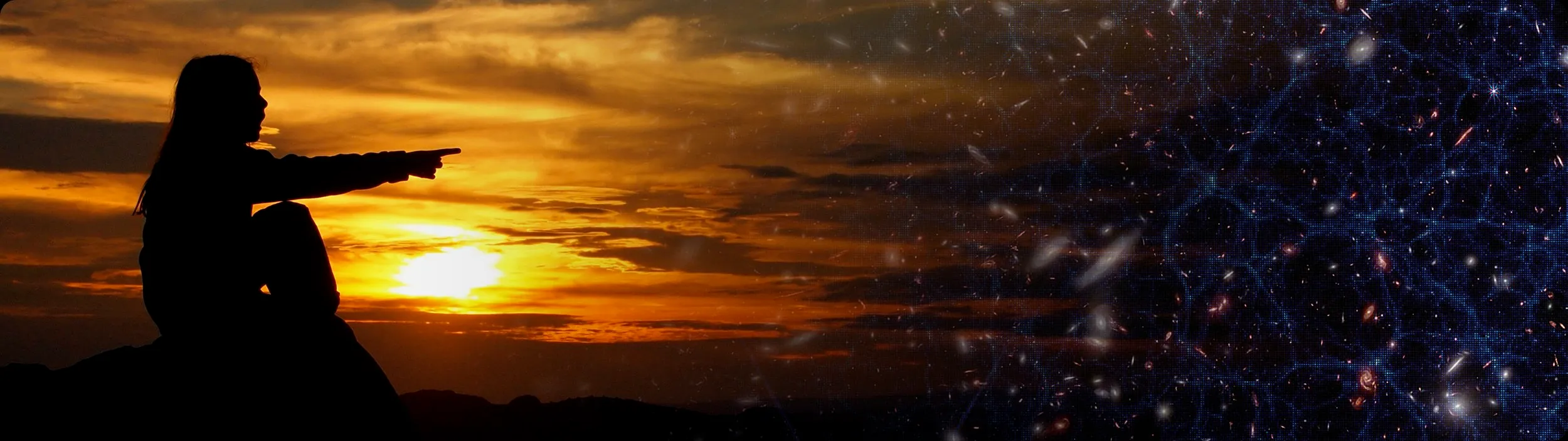
Planetary Education begins where learners live — in specific places, cultures, and communities.
In Canada, it means grounding learning in Indigenous knowledge systems, boreal and Arctic ecologies, treaty relationships, and the lived consequences of resource extraction. In every context, the universal framework must be adapted through the local lens.
This single principle — planetary scope, local roots — is what separates Planetary Education from both narrow environmentalism and abstract globalism. It asks learners to think at the scale of the Earth system while acting within the relationships and responsibilities of their own place.
From Blueprint to Practice
Planetary Education is designed to be implemented, not only imagined. The framework translates into four operational tracks:
Curriculum
Scope and sequence across age bands. Exemplar units for each strand. Assessment principles aligned with capabilities and outcomes rather than content recall alone.
Educator Development
Teacher guides, professional learning pathways, emotional literacy for difficult topics, and pedagogy for systems thinking. Educators are not expected to know everything — they are supported to learn alongside their students.
Whole-School Culture
School gardens, biodiversity audits, energy and waste practices, seasonal rituals, and place-based projects. The school itself becomes a learning environment, not just the classroom.
Community Interface
Whanau, scientists, artists, mana whenua, local councils, museums, and NGOs as active partners in learning. Education extends beyond the school gate into the networks and knowledge systems of the wider community.
Roadmap
2026 — Framework publication and prototype modules
2027 — Pilot partnerships with schools and communities
2028 — Open library of modules, guides, and case studies
Collaborate
Planetary Education is an open framework. It grows through partnership, adaptation, and shared practice.
Schools — Explore pilot-ready modules and adapt them to your context.
Educators — Access teaching resources, guides, and professional learning pathways.
Partners — Collaborate on curriculum development, scientific review, design, or evaluation.
Funders — Support the development of a public planetary learning commons.
Curriculum designers — Contribute to strand development and assessment design.
References
A selected bibliography of the works informing this framework — the pedagogical lineage, Indigenous knowledge systems, scientific assessments, and contemporary curriculum architectures named above. Citations follow Chicago author-date style; DOIs and stable identifiers are provided where available.
Pedagogical lineage
Freire, Paulo. 1970. Pedagogy of the Oppressed. Translated by Myra Bergman Ramos. New York: Herder and Herder. (30th-anniversary edition, New York: Continuum, 2000.)
Gadotti, Moacir. 2008. “What We Need to Learn to Save the Planet.” Journal of Education for Sustainable Development 2 (1): 21–30. https://doi.org/10.1177/097340820800200108.
Kahn, Richard. 2010. Critical Pedagogy, Ecoliteracy, and Planetary Crisis: The Ecopedagogy Movement. Counterpoints, vol. 359. New York: Peter Lang.
Lotz-Sisitka, Heila, Arjen E. J. Wals, David Kronlid, and Dylan McGarry. 2015. “Transformative, Transgressive Social Learning: Rethinking Higher Education Pedagogy in Times of Systemic Global Dysfunction.” Current Opinion in Environmental Sustainability 16: 73–80. https://doi.org/10.1016/j.cosust.2015.07.018.
Morin, Edgar. 1999. Seven Complex Lessons in Education for the Future. Translated by Nidra Poller. Paris: UNESCO. https://unesdoc.unesco.org/ark:/48223/pf0000117740. (French original: Les sept savoirs nécessaires à l’éducation du futur, Paris: UNESCO, 1999.)
Orr, David W. 1992. Ecological Literacy: Education and the Transition to a Postmodern World. Albany: State University of New York Press.
Sterling, Stephen. 2001. Sustainable Education: Re-visioning Learning and Change. Schumacher Briefing no. 6. Dartington: Green Books.
Stone, Michael K., and Zenobia Barlow, eds. 2005. Ecological Literacy: Educating Our Children for a Sustainable World. San Francisco: Sierra Club Books.
Wals, Arjen E. J., ed. 2007. Social Learning Towards a Sustainable World: Principles, Perspectives, and Praxis. Wageningen: Wageningen Academic Publishers.
Indigenous knowledge systems
Bartlett, Cheryl, Murdena Marshall, and Albert Marshall. 2012. “Two-Eyed Seeing and Other Lessons Learned within a Co-learning Journey of Bringing Together Indigenous and Mainstream Knowledges and Ways of Knowing.” Journal of Environmental Studies and Sciences 2 (4): 331–340. https://doi.org/10.1007/s13412-012-0086-8.
Durie, Mason. 2004. “Understanding Health and Illness: Research at the Interface between Science and Indigenous Knowledge.” International Journal of Epidemiology 33 (5): 1138–1143. https://doi.org/10.1093/ije/dyh250.
Letseka, Moeketsi. 2012. “In Defence of Ubuntu.” Studies in Philosophy and Education 31 (1): 47–60. https://doi.org/10.1007/s11217-011-9267-2.
Royal, Te Ahukaramū Charles. 2009. Mātauranga Māori: An Introduction. Wellington: Mauriora-ki-te-Ao.
Shiva, Vandana. 2005. Earth Democracy: Justice, Sustainability, and Peace. Cambridge, MA: South End Press. https://archive.org/details/earthdemocracyju0000shiv.
Smith, Linda Tuhiwai. 1999. Decolonizing Methodologies: Research and Indigenous Peoples. London: Zed Books. (2nd edition, 2012.)
Waghid, Yusef. 2014. African Philosophy of Education Reconsidered: On Being Human. New Directions in the Philosophy of Education. London: Routledge.
Scientific assessments and planetary boundaries
The planetary boundaries framework — proposed by Rockström and colleagues in 2009 and updated by Steffen and colleagues in 2015 and Richardson and colleagues in 2023 — is now assessed annually through the Planetary Health Check reports, published by the Planetary Boundaries Science initiative at the Potsdam Institute for Climate Impact Research (PIK). GLOBAÏA is the initiative’s creative partner, developing its visual identity, figures, and the diagnostic symbol that distills the nine boundaries into a single image.
Caesar, Levke, Boris Sakschewski, Lauren Seaby Andersen, et al. 2024. Planetary Health Check Report 2024: A Scientific Assessment of the State of the Planet. Potsdam: Potsdam Institute for Climate Impact Research. https://publications.pik-potsdam.de/pubman/item/item_30275.
IPBES. 2019. Global Assessment Report on Biodiversity and Ecosystem Services of the Intergovernmental Science-Policy Platform on Biodiversity and Ecosystem Services. Edited by E. S. Brondízio, J. Settele, S. Díaz, and H. T. Ngo. Bonn: IPBES Secretariat. https://doi.org/10.5281/zenodo.3831673.
IPCC. 2021. Climate Change 2021: The Physical Science Basis. Contribution of Working Group I to the Sixth Assessment Report of the Intergovernmental Panel on Climate Change. Edited by V. Masson-Delmotte, P. Zhai, A. Pirani, et al. Cambridge and New York: Cambridge University Press. https://doi.org/10.1017/9781009157896.
IPCC. 2022. Climate Change 2022: Impacts, Adaptation and Vulnerability. Contribution of Working Group II to the Sixth Assessment Report of the Intergovernmental Panel on Climate Change. Edited by H.-O. Pörtner, D. C. Roberts, M. Tignor, et al. Cambridge and New York: Cambridge University Press. https://doi.org/10.1017/9781009325844.
IPCC. 2022. Climate Change 2022: Mitigation of Climate Change. Contribution of Working Group III to the Sixth Assessment Report of the Intergovernmental Panel on Climate Change. Edited by P. R. Shukla, J. Skea, R. Slade, et al. Cambridge and New York: Cambridge University Press. https://doi.org/10.1017/9781009157926.
IPCC. 2023. Climate Change 2023: Synthesis Report. Contribution of Working Groups I, II and III to the Sixth Assessment Report of the Intergovernmental Panel on Climate Change. Core Writing Team, H. Lee and J. Romero, eds. Geneva: IPCC. https://doi.org/10.59327/IPCC/AR6-9789291691647.
Richardson, Katherine, Will Steffen, Wolfgang Lucht, et al. 2023. “Earth beyond Six of Nine Planetary Boundaries.” Science Advances 9 (37): eadh2458. https://doi.org/10.1126/sciadv.adh2458.
Rockström, Johan, Will Steffen, Kevin Noone, et al. 2009. “A Safe Operating Space for Humanity.” Nature 461 (7263): 472–475. https://doi.org/10.1038/461472a.
Rockström, Johan, Will Steffen, Kevin Noone, et al. 2009. “Planetary Boundaries: Exploring the Safe Operating Space for Humanity.” Ecology and Society 14 (2): 32. https://doi.org/10.5751/ES-03180-140232.
Sakschewski, Boris, Levke Caesar, Lauren Seaby Andersen, et al. 2025. Planetary Health Check 2025: A Scientific Assessment of the State of the Planet. Potsdam: Potsdam Institute for Climate Impact Research. https://doi.org/10.48485/pik.2025.017.
Steffen, Will, Katherine Richardson, Johan Rockström, et al. 2015. “Planetary Boundaries: Guiding Human Development on a Changing Planet.” Science 347 (6223): 1259855. https://doi.org/10.1126/science.1259855.
Frameworks, curricula, and contemporary scholarship
Durán, América Paz, Jan J. Kuiper, Ana Paula Dutra Aguiar, et al. 2023. “Bringing the Nature Futures Framework to Life: Creating a Set of Illustrative Narratives of Nature Futures.” Sustainability Science 18. https://doi.org/10.1007/s11625-023-01316-1.
Hawkins, Ed. 2018. “Warming Stripes.” Climate Lab Book, May 22, 2018. https://www.climate-lab-book.ac.uk/2018/warming-stripes/.
Kidman, Gillian, and Chew-Hung Chang. 2025. “Planetary Pedagogies: Reimagining Geography and Environmental Education in the Anthropocene.” International Research in Geographical and Environmental Education 34 (3). https://doi.org/10.1080/10382046.2025.2519879.
Kim, HyeJin, Garry D. Peterson, William W. L. Cheung, et al. 2023. “Towards a Better Future for Biodiversity and People: Modelling Nature Futures.” Global Environmental Change 82: 102681. https://doi.org/10.1016/j.gloenvcha.2023.102681.
OECD. 2019. OECD Future of Education and Skills 2030: OECD Learning Compass 2030 — A Series of Concept Notes. Paris: OECD Publishing. https://www.oecd.org/content/dam/oecd/en/about/projects/edu/education-2040/1-1-learning-compass/OECD_Learning_Compass_2030_Concept_Note_Series.pdf.
Pereira, Laura M., Kathryn K. Davies, Eefje den Belder, et al. 2020. “Developing Multiscale and Integrative Nature–People Scenarios Using the Nature Futures Framework.” People and Nature 2 (4): 1172–1195. https://doi.org/10.1002/pan3.10146.
United Nations General Assembly. 2019. Education for Sustainable Development in the Framework of the 2030 Agenda for Sustainable Development. Resolution A/RES/74/223, 19 December 2019.
UNESCO. 2020. Education for Sustainable Development: A Roadmap. Paris: UNESCO. https://unesdoc.unesco.org/ark:/48223/pf0000374802.