Last updated: November 13, 2024
In Brief
Stockholm Resilience Centre · Potsdam Institute for Climate Impact Research
Planetary Boundaries
2025 Update — Seven of nine Planetary Boundaries are now transgressed!
The Planetary Health Check 2025 confirms ocean acidification as the 7th boundary crossed. Visit planetaryhealthcheck.org or our dedicated page on the Planetary Health Check to learn more.
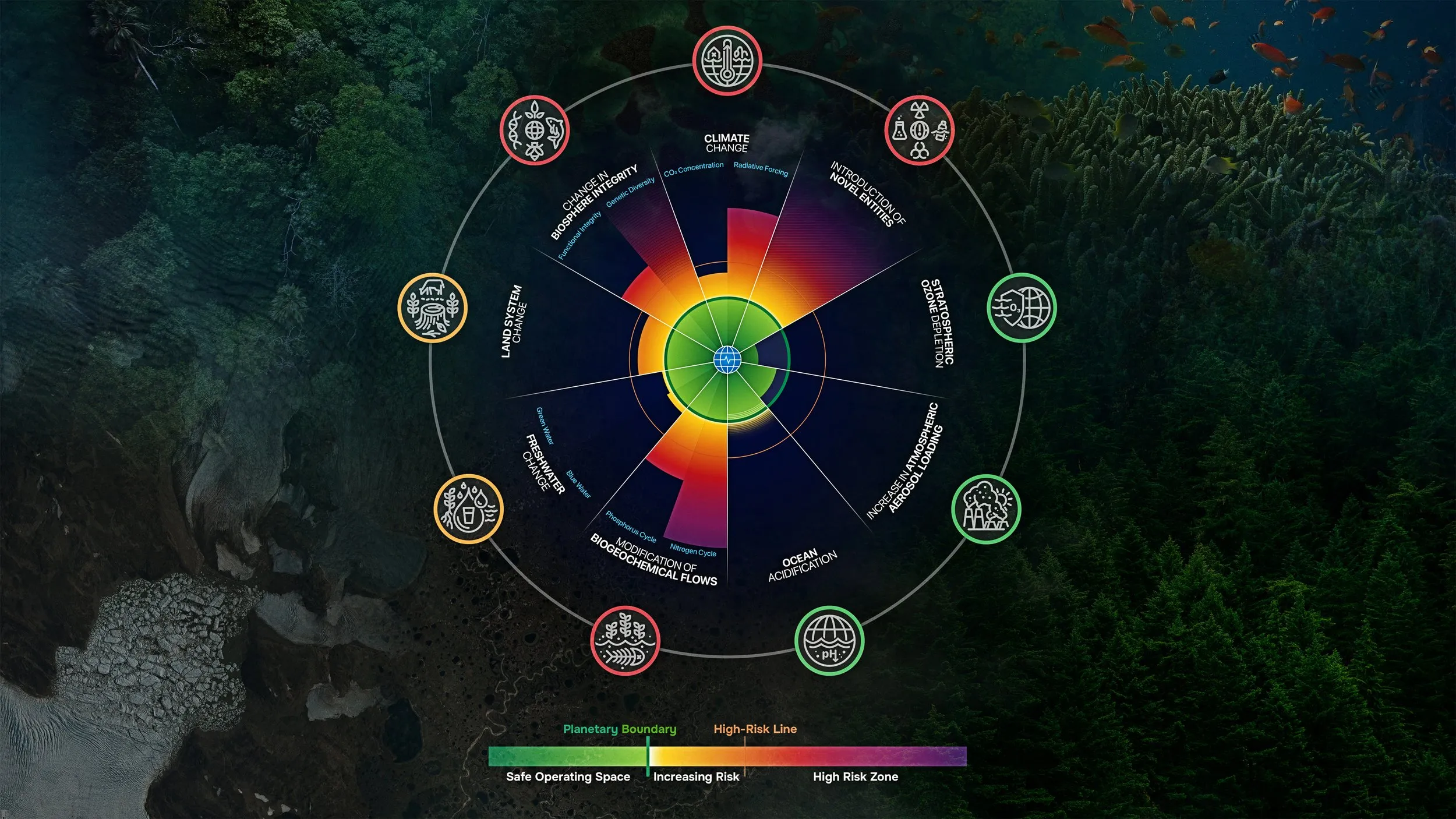
Planetary Boundaries 2024 (left) and Planetary Health Check 2024 (right) — the evolving framework for tracking Earth’s vital signs. As of 2025, seven of nine boundaries are transgressed.
Throughout our collaboration with the esteemed researchers at the Stockholm Resilience Centre and the Potsdam Institute for Climate Impact Research, we have been privileged to contribute to the visualisation and communication of planetary boundaries over the years.
The Planetary Boundaries framework is a groundbreaking scientific concept introduced in 2009 by a group of Earth system and environmental scientists led by Johan Rockström, who was then the director of the Stockholm Resilience Centre. Published in the journal Nature, their seminal paper identified 9 critical Earth system processes that regulate the planet’s stability and resilience. The framework is based on Complex System Science (CSS) and Earth System Science (ESS), which study the intricate interactions among Earth’s components—atmosphere, biosphere, hydrosphere, and geosphere—and how human activities impact these systems.
Planetary Boundaries These are the thresholds or limits beyond which significant, potentially irreversible changes to Earth’s ecosystems and the global environment could occur, endangering the planet’s habitability.
Earth System Processes The Planetary Boundaries are associated with 9 essential Earth system processes that help maintain the stability and resilience of the Earth system.
As of the 2025 Planetary Health Check, the 9 Planetary Boundaries are:
Climate Change
ExceededThis boundary measures atmospheric CO₂ levels and the total impact of human activities on Earth's energy balance. The safe limit for CO₂ is set at 350 ppm, while the current level is 423 ppm. The safe level for radiative forcing is +1.0 W/m², but it has reached +2.97 W/m² — nearly three times the safe threshold. We are well beyond the safe boundary and continuing to move in the wrong direction.
Biosphere Integrity
ExceededBiosphere integrity looks at genetic diversity and the health of ecosystems. For genetic diversity, the boundary is set below 10 E/MSY, but current rates exceed 100 E/MSY. For ecosystem health, the boundary is less than 10% HANPP, but the current level is 30%, surpassing both safe limits.
Novel Entities
ExceededThis boundary addresses synthetic chemicals and pollutants introduced into the environment, including plastics and endocrine disruptors. Over 350,000 synthetic chemicals have been introduced, many of which remain untested for environmental impact. Plastics alone exceed 8.3 billion tons globally.
Biogeochemical Flows
ExceededFor nitrogen, the planetary boundary is 62 Tg N/year, while current human fixation has reached 165 Tg N/year — over 2.5 times the safe limit. For phosphorus, regional application is 18.2 Tg P/year, triple the 6.2 Tg P/year boundary and above the high-risk threshold. Both are significantly exceeded, leading to widespread water pollution, eutrophication, and "dead zones" in aquatic systems.
Land System Change
Increasing RiskThis boundary monitors the percentage of original forest cover remaining globally. The planetary boundary is 75%, but only 59% currently remains — approaching the 54% high-risk threshold. Each year, approximately 10 million hectares of forest are lost, contributing to biodiversity loss, disrupted water cycles, and climate impacts.
Freshwater Change
ExceededFor blue water (rivers, lakes, aquifers), the safe limit is 12.9% of land area with flow deviations; the current level is 22.6%. For green water (soil moisture), the boundary is 12.4%, but we have reached 22.0% — approximately twice the safe threshold for both, indicating severe transgressions in global hydrological flows.
Ocean Acidification
ExceededThe boundary focuses on aragonite saturation state in surface seawater. The planetary boundary is 2.86 Ω (preindustrial reference: 3.57 Ω), and the current global mean is 2.84 Ω, confirming the boundary has been transgressed. The high-risk threshold stands at 2.50 Ω. Over 40% of the global surface ocean and up to 60% of subsurface waters have crossed the boundary, with severe consequences for calcifying organisms including corals, pteropods, and shellfish.
Atmospheric Aerosol Loading
Safe ZoneThis boundary measures the difference in aerosol optical depth between hemispheres, with a safe limit of 0.1. The current value is 0.063 and decreasing — well within the safe zone and continuing to improve, thanks to reductions in particulate matter emissions.
Stratospheric Ozone Depletion
Safe ZoneThe safe limit is less than 5% reduction from preindustrial levels (~276 DU). The current global ozone concentration is 285.7 DU — within the safe zone, with ongoing recovery due to the phase-out of ozone-depleting substances under the Montreal Protocol.
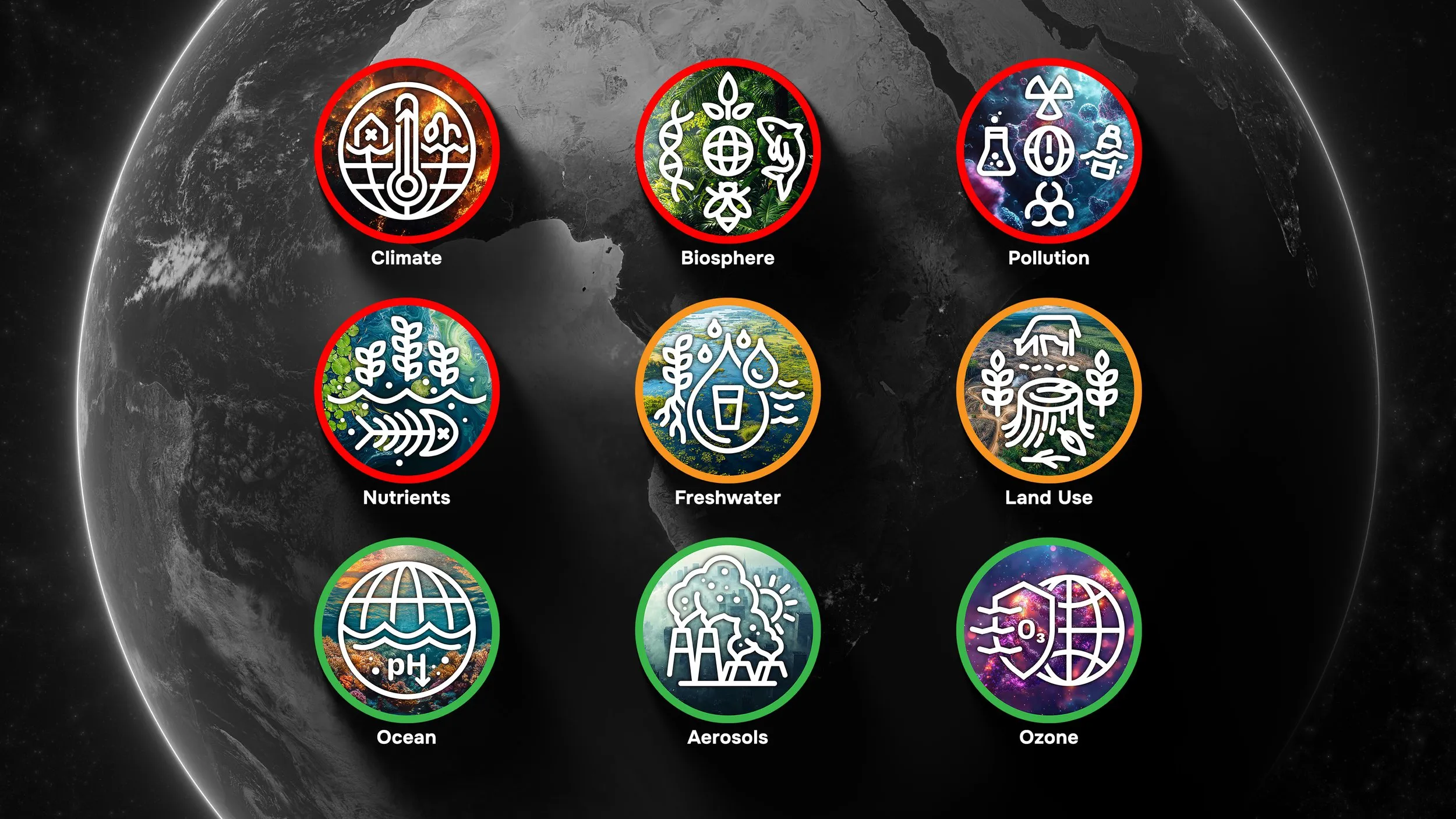
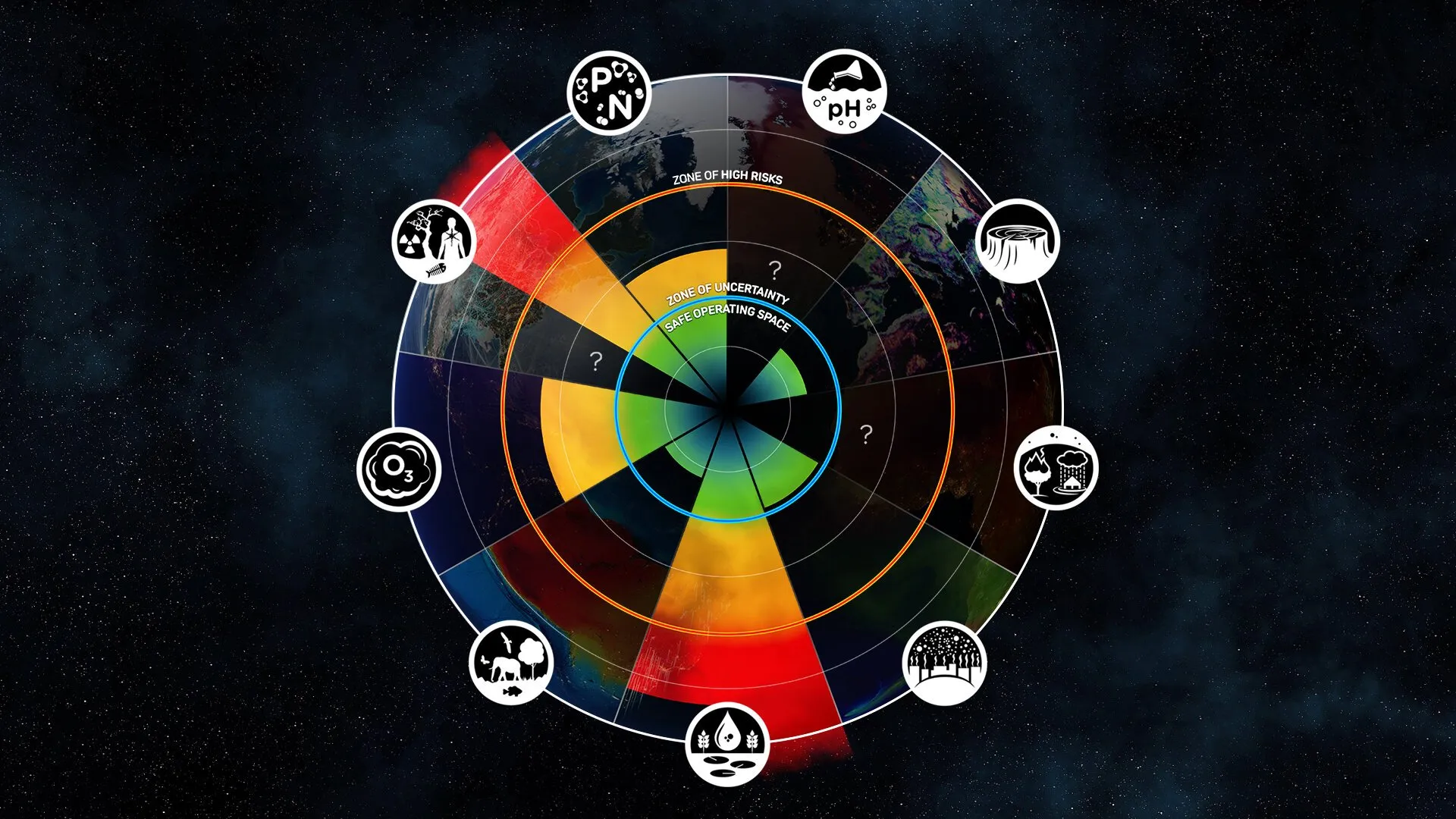
Symbolic representations of the nine planetary boundaries.
We may categorize planetary boundaries into three broad groups:
Global
🌍 Planetary Boundaries
Climate, Ocean, and Ozone. These boundaries affect the entire Earth system and have global-scale impacts.
Biospheric
🌿 Planetary Boundaries
Biodiversity, Land, Freshwater, and Nutrients. These boundaries concern the living systems of the Earth.
Alien
🧪 Planetary Boundaries
Pollution (synthetic chemicals, GMOs) and Aerosols. Human-introduced elements foreign to natural Earth systems.
Planetary Boundaries v3.0 (09.2023)
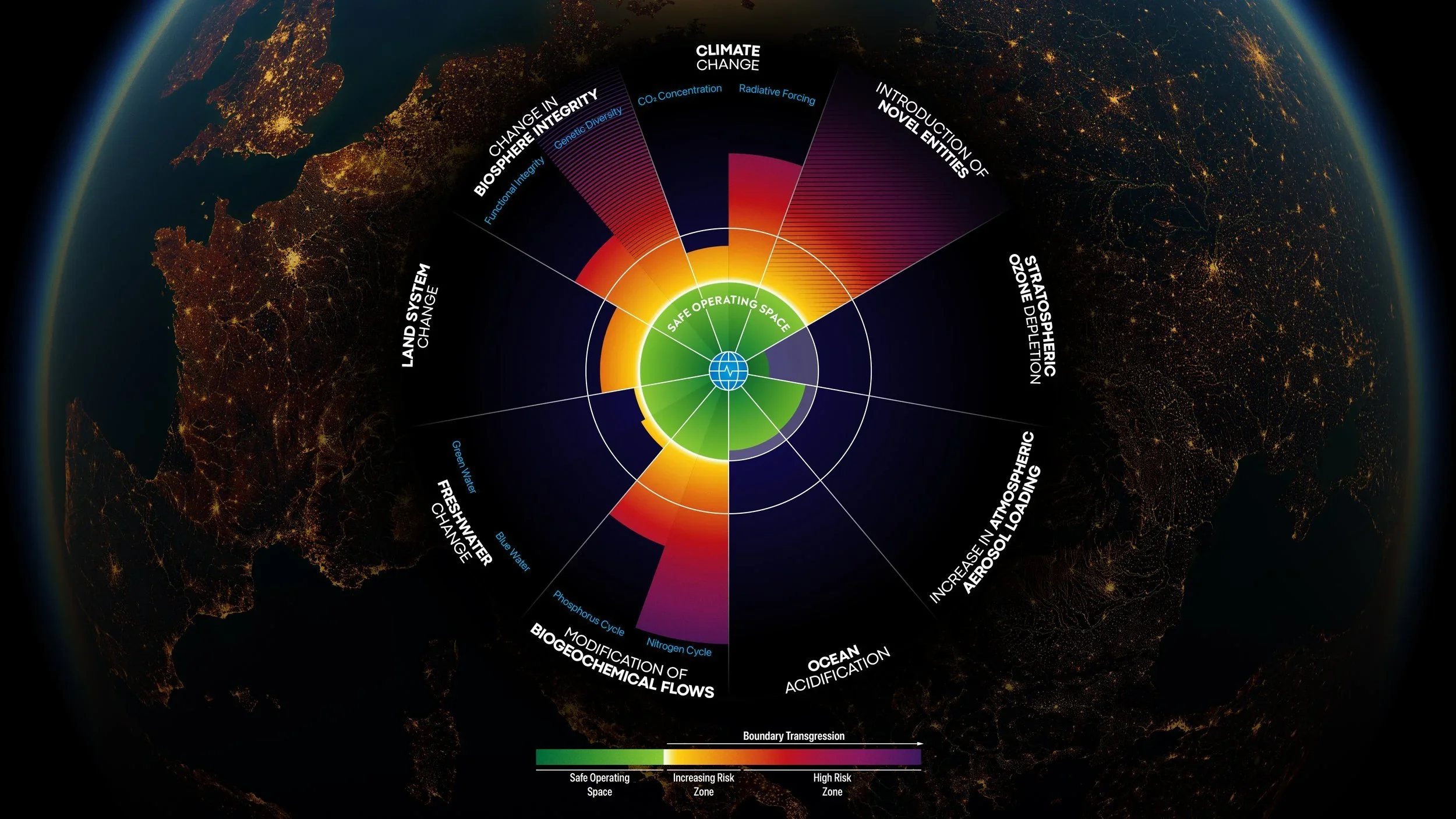
What’s new? For the first time, the boundary for Novel Entities has been quantified, revealing that we have exceeded it. This includes the build-up of human-made chemicals like micro-plastics, pesticides, and nuclear waste. Additionally, scientific data is now available to measure the limit for Atmospheric Aerosol Loading. While this limit hasn’t been globally surpassed, regional oversteps have been identified, such as in South Asia. The boundary concerning Freshwater now encompasses both Green Water (found in soil and plants in areas like farms and forests) and Blue Water (found in rivers and lakes), and both these limits have been breached. Another groundbreaking addition is a control variable for Biosphere Integrity, which shows that we’ve been exceeding this limit since the late 1800s, a period marked by significant growth in global agriculture and forestry. This study emphasises that planetary resilience encompasses much more than just Climate Change.
Reference:
- Katherine Richardson et al., Earth beyond six of nine planetary boundaries. Science Advances. 9, eadh2458 (2023). DOI:10.1126/sciadv.adh2458
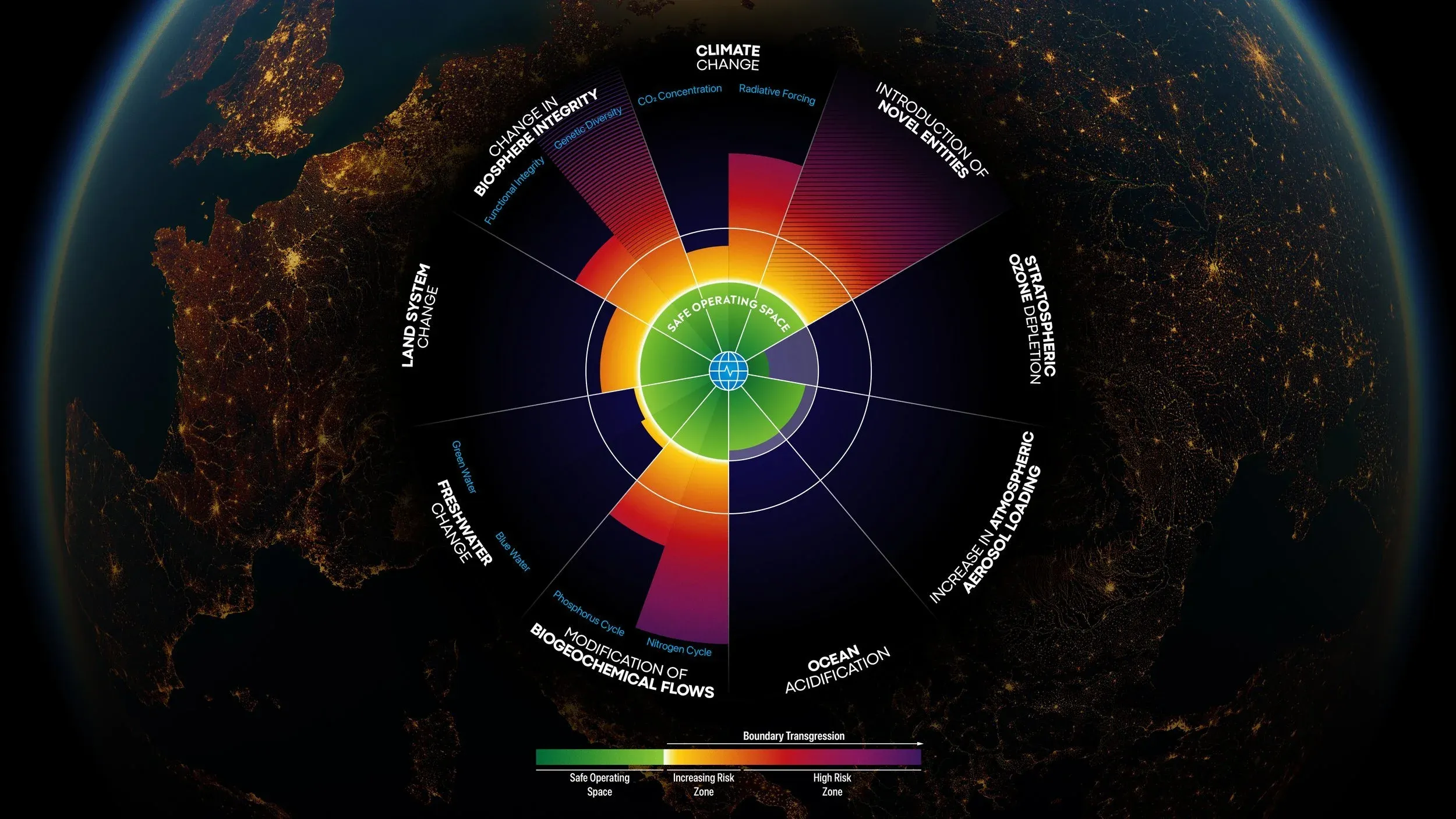
Planetary Boundaries v3.0 (2023) This new visualisation of planetary boundaries was created in collaboration with the scientists from the Potsdam Institute for Climate Impact Research. It differs from Figure 1 in the paper because it uses a different normalised baseline. In Figure 1, the values from control variables are normalised such that the origin (the centre) represents mean Holocene conditions, and the planetary boundary (from green to yellow) has the same radius for all boundaries. In this visualisation, however, it is normalised so that the planetary boundary and the transition from the Increasing Risk Zone to the High Risk Zone are consistent for all boundaries. This approach was adopted in versions 1 (2009) and 2 (2015).
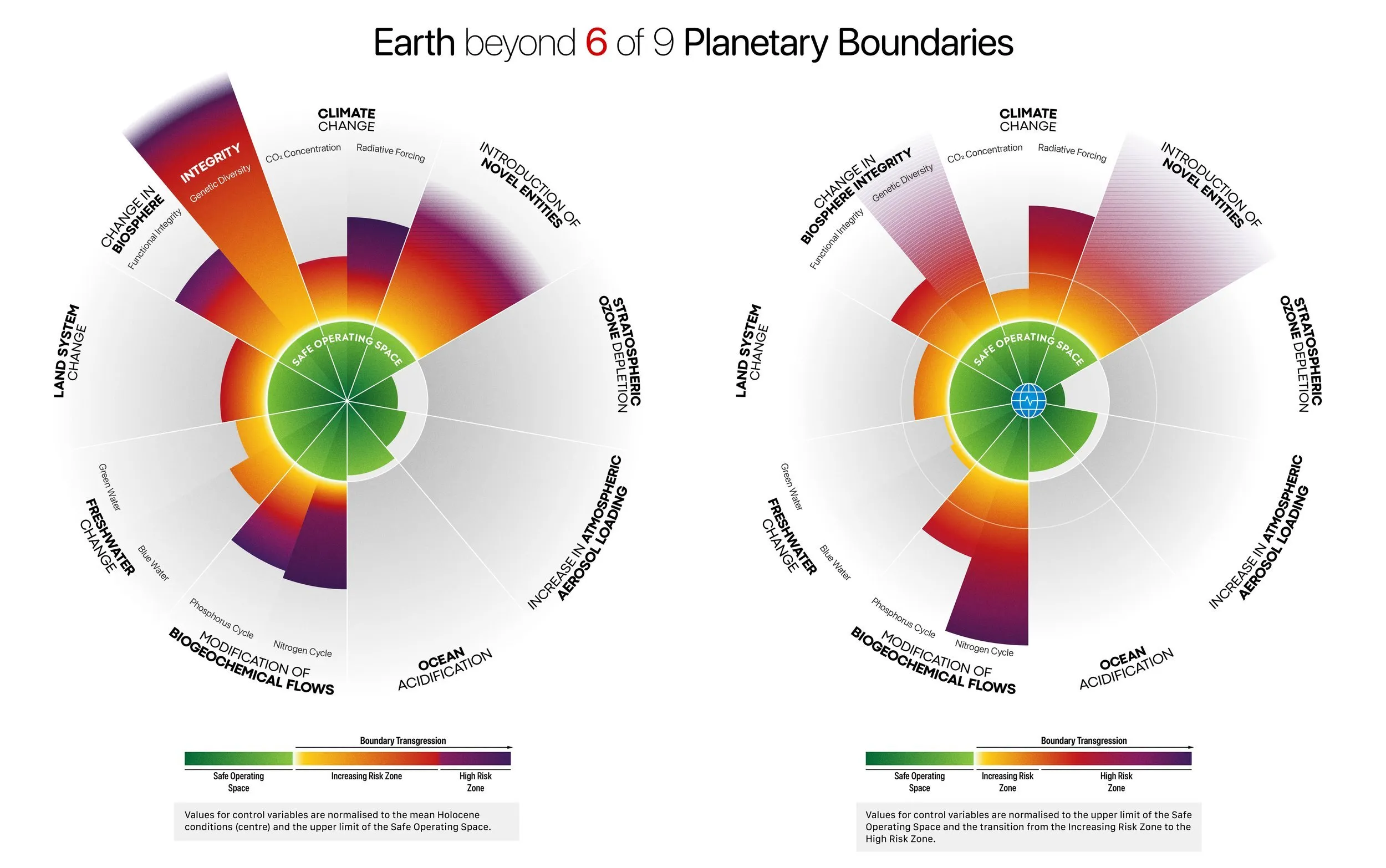
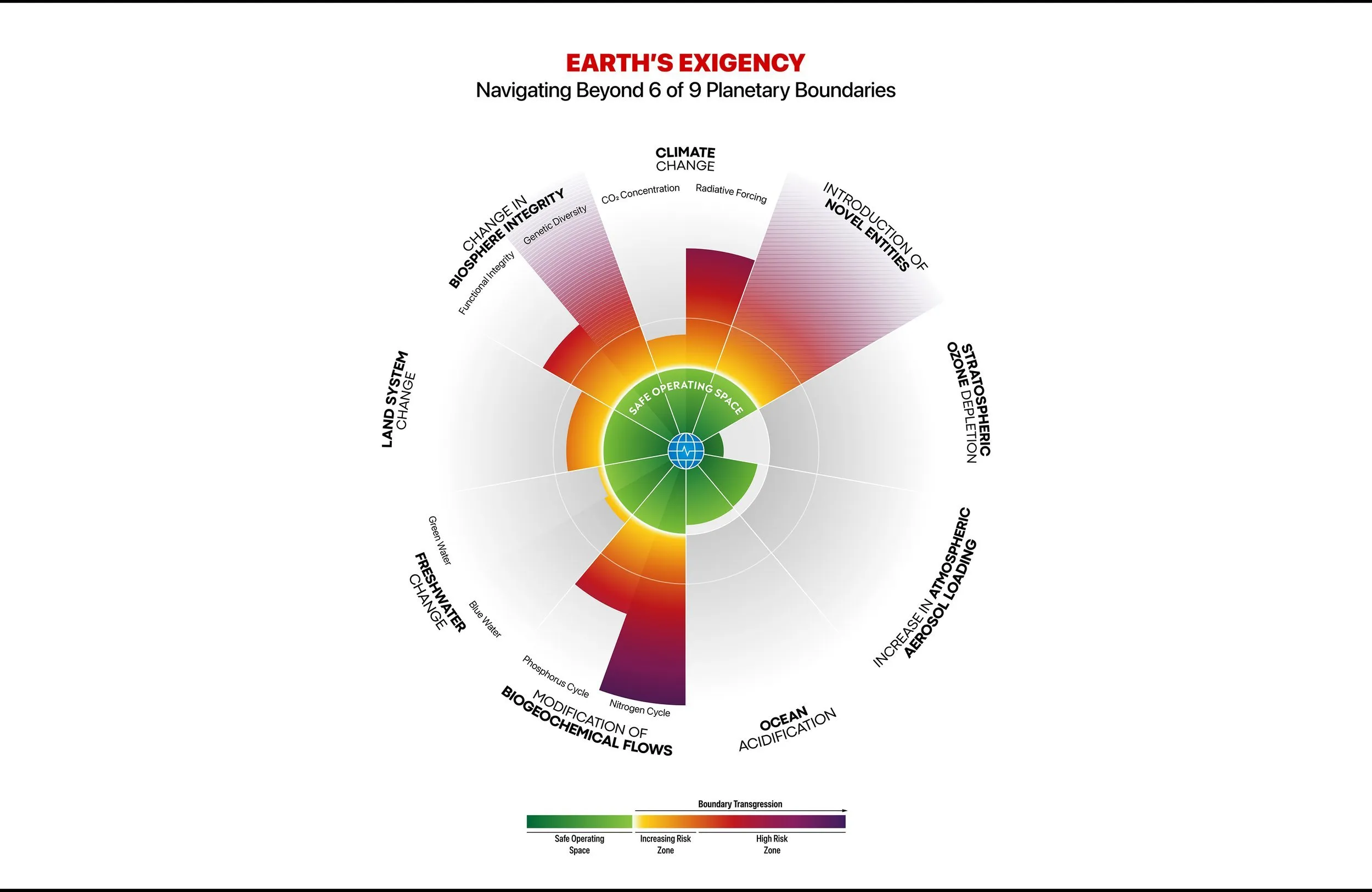
Same data but two ways of visualising it. In the left-hand side figure, the values for control variables are normalised to the mean Holocene conditions (centre) and the upper limit of the Safe Operating Space. In the right-hand side one, values for control variables are normalised to the upper limit of the Safe Operating Space and the transition from the Increasing Risk Zone to the High Risk Zone.
Planetary boundaries in the Anthropocene, from 1950 to 2020. Created in collaboration with the Potsdam Institute for Climate Impact Research.
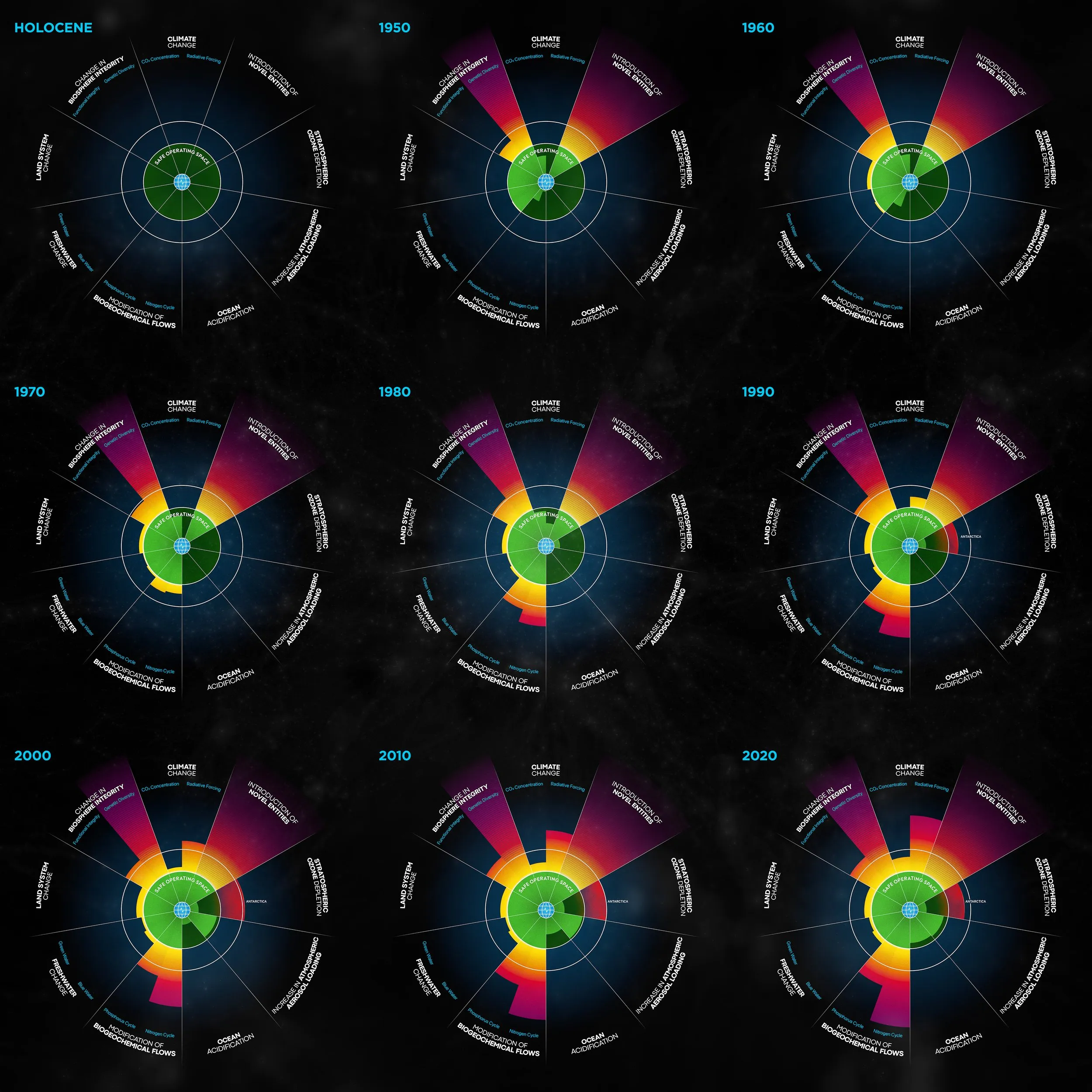
Planetary boundaries in the Anthropocene, from 1950 to 2020 — step-by-step evolution.

Planetary Boundaries v3.0 — linear representation of all nine boundaries and their current status.
Boundary Interactions
The nine planetary boundaries do not operate in isolation — they are deeply interconnected through cascading feedbacks. Climate change drives ocean acidification (both originate from CO₂ emissions) and freshwater disruption (altered precipitation patterns). Land-system change reduces biosphere integrity while weakening carbon sinks that regulate the climate. Biogeochemical flows — excess nitrogen and phosphorus — cascade through freshwater systems to coastal oceans, triggering eutrophication that compounds ocean acidification stress on marine ecosystems.
These interactions mean that transgressing one boundary can accelerate the transgression of others. Recent research (Rockström et al. 2024) identifies climate change and biosphere integrity as the two “core” boundaries whose transgression amplifies risks across the entire Earth system. For example, deforestation (land-system change) reduces evapotranspiration, altering regional rainfall (freshwater change), while also releasing stored carbon (climate change) and fragmenting habitats (biosphere integrity). Understanding these interconnections is essential for effective governance: addressing boundaries in isolation risks solving one problem while worsening another.
Future Projections
Looking forward, research using the IMAGE integrated assessment model (van Vuuren et al. 2025) reveals a sobering reality: even under the most ambitious policy scenarios combining climate action, dietary shifts, and resource efficiency, several planetary boundaries will remain transgressed through 2050 due to system inertia — the time lag between implementing solutions and seeing planetary-scale recovery. Under business-as-usual trends, the situation worsens for all boundaries except stratospheric ozone.
This finding has profound implications. It means that returning to a safe operating space requires not only immediate and ambitious action across all boundaries simultaneously, but also long-term commitment spanning decades. It also highlights the critical importance of preventing further transgression: the deeper humanity pushes beyond these boundaries, the longer recovery will take and the greater the risk of crossing irreversible tipping points.
Related concepts
Planetary Health Check The Planetary Health Check (PHC) is a periodic scientific assessment published by Planetary Boundaries Science (PBScience) at the Potsdam Institute for Climate Impact Research (PIK). It provides the most up-to-date quantification of all nine planetary boundaries and their control variables. The 2025 edition confirmed that seven of nine boundaries are now transgressed, with ocean acidification joining the list.
Our dedicated page: globaia.org/phc
Safe Operating Space (SOS) The “Safe Operating Space” refers to the collective range defined by scientifically-set boundary levels for nine critical biophysical systems and processes that govern Earth’s life support systems. Transgressing these boundaries jeopardizes the conditions vital for human development and well-being.
Planetary Resilience Planetary resilience refers to the Earth’s capacity to maintain its vital biophysical systems and processes within safe boundaries, ensuring stability and support for life. This concept is anchored in the understanding of planetary boundaries. Transgressing these boundaries poses risks to the stability and resilience of the Earth system, potentially resulting in significant environmental damage. The objective is to maintain the Earth in a “Holocene-like” state, the only known planetary condition that has reliably supported modern human civilisation.
Holocene-like Modern humans have thrived on Earth for about 200,000 years, enduring through Ice Ages and warm periods, predominantly as hunter-gatherers. The Holocene, which began around 12,000 years ago, marked a stable Earth state, paving the way for agriculture and modern civilisations. The Planetary Boundary framework uses this “Holocene-like” state as a reference to understand how much planetary change can be tolerated without jeopardising conditions similar to those of the Holocene, which are known to support our current world. This approach is exemplified by the climate planetary boundary being set at 350 ppm CO2, instead of the original Holocene level of 280 ppm.
Tipping Points Tipping points refer to thresholds where critical components of the Earth system can shift into a drastically different state, whereas planetary boundaries are limits beyond which risks to the Earth’s systems become unsafe. While crossing a planetary boundary doesn’t necessarily mean surpassing a tipping point, the concept of tipping points informs the establishment of these boundaries to ensure the Earth’s systems remain stable and interlinked processes are considered.
Our dedicated page: globaia.org/tipping
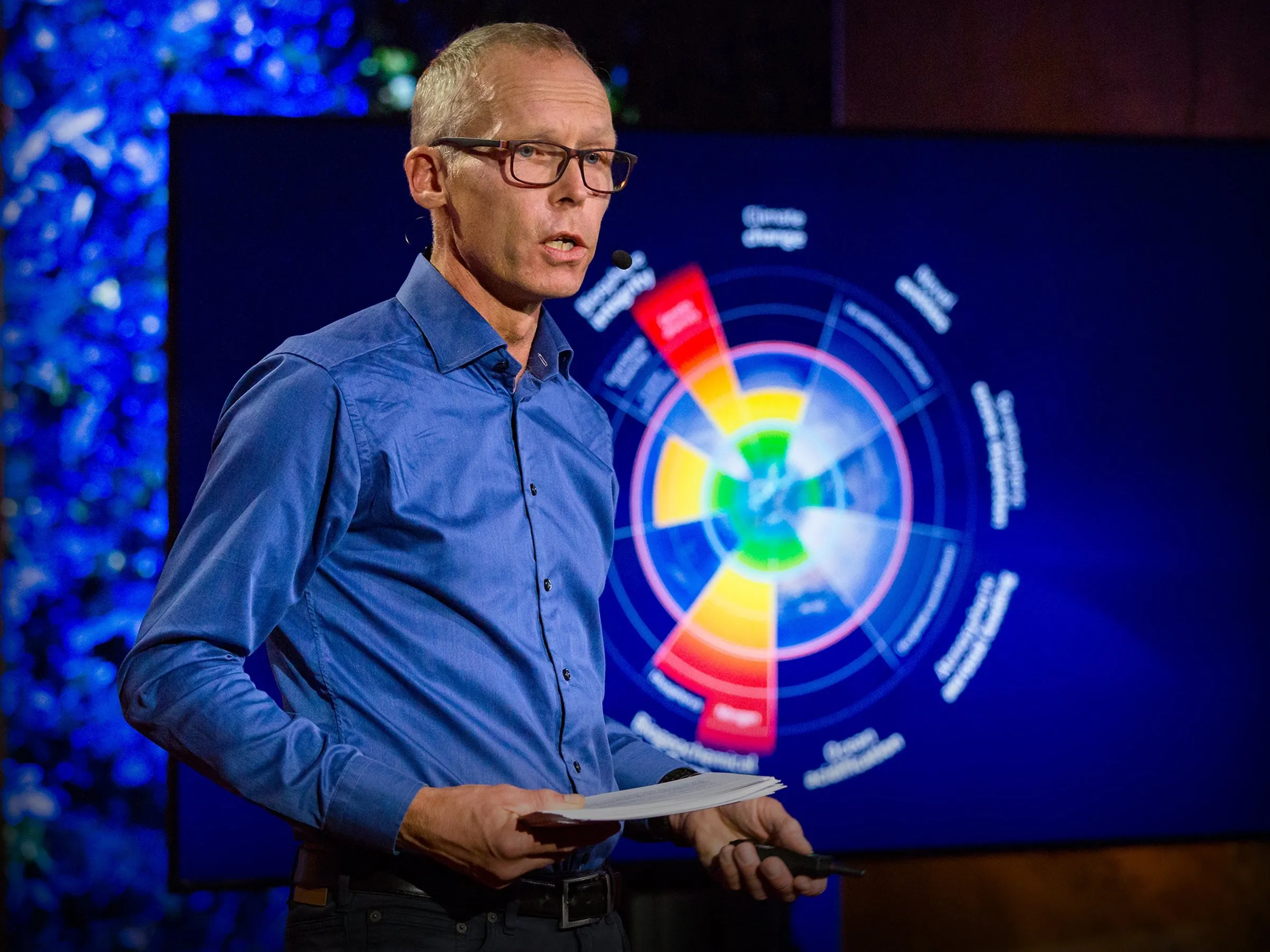
Professor Johan Rockström, lead architect of the Planetary Boundaries framework.
Safe and Just Earth System Boundaries The recent Earth system boundaries (ESB) assessment expands upon the planetary boundaries framework by integrating concepts like climate justice, doughnut economics and the Sustainable Development Goals. The ESBs emphasise a safe and just operating space and prioritise scaling quantitative boundaries across local to global levels. Developed by the Earth Commission, the ESBs aim to prevent significant harm to individuals by identifying eight specific control variables for five core planetary processes, serving as the foundation for actionable, science-based targets at regional and local scales.
Our dedicated page: globaia.org/safeandjust
References:
- PB v1.0 — Seminal 2009 Nature paper: A safe operating space for humanity
- PB v2.0 — 2015 Science paper: Planetary boundaries: Guiding human development on a changing planet
- PB v3.0 — 2023 Science Advances paper: Earth beyond six of nine planetary boundaries
- Newly assessed Novel Entities boundary: Outside the Safe Operating Space of the Planetary Boundary for Novel Entities
- New assessed Green Water boundary: A planetary boundary for green water
- Rockström et al. 2024, Nature Reviews Earth & Environment: Planetary boundaries: Guiding humanity’s future on Earth — comprehensive review of the PB framework evolution from v1.0 to v3.0
- Findlay et al. 2025, Global Change Biology: Ocean Acidification: Another Planetary Boundary Crossed — confirms ocean acidification as the 7th boundary transgressed
- Stenzel et al. 2025, One Earth: Breaching planetary boundaries: Over half of global land area suffers critical losses in functional biosphere integrity — spatially explicit mapping showing 60% of global land area has transgressed local biosphere integrity boundaries
- van Vuuren et al. 2025, Nature: Exploring pathways for world development within planetary boundaries — IMAGE model projections showing system inertia limits recovery even with ambitious policies
- Planetary Health Check 2025 — the most comprehensive assessment to date (7 of 9 boundaries transgressed)
- Dedicated page of the Stockholm Resilience Centre
Other relevant project: Breaking Boundaries — The Science of Our Planet
Pre-2023 Work on Planetary Boundaries
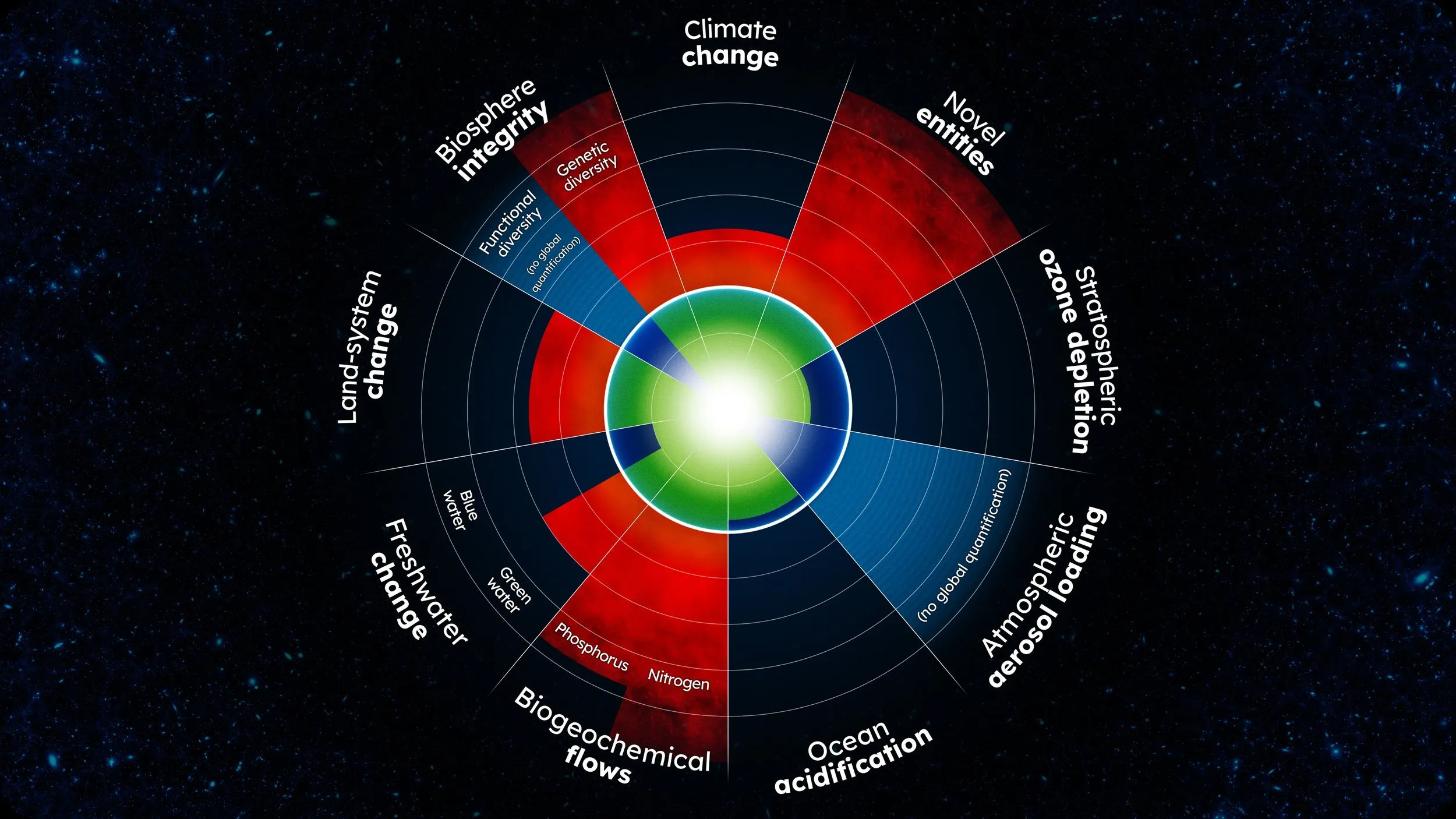
The updated Planetary Boundaries framework (2022), showing the newly assessed boundary for ‘novel entities’ (aka chemical pollution), as well as the distinction between ‘blue water’ and ‘green water’. REF: https://pubs.acs.org/doi/10.1021/acs.est.1c04158 & https://www.nature.com/articles/s43017-022-00287-8
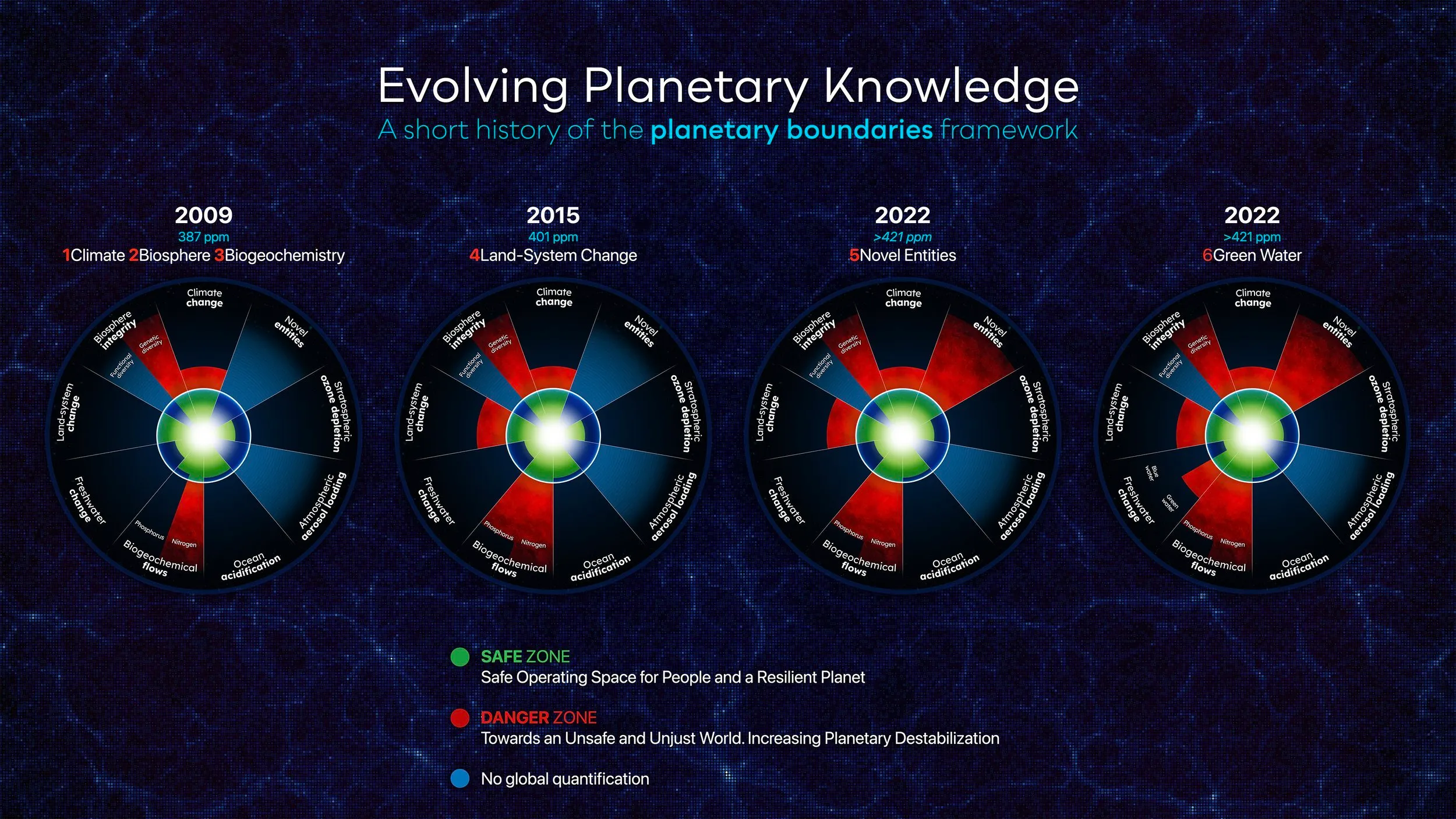
Evolving planetary knowledge — scientific understanding of Earth system boundaries over time.
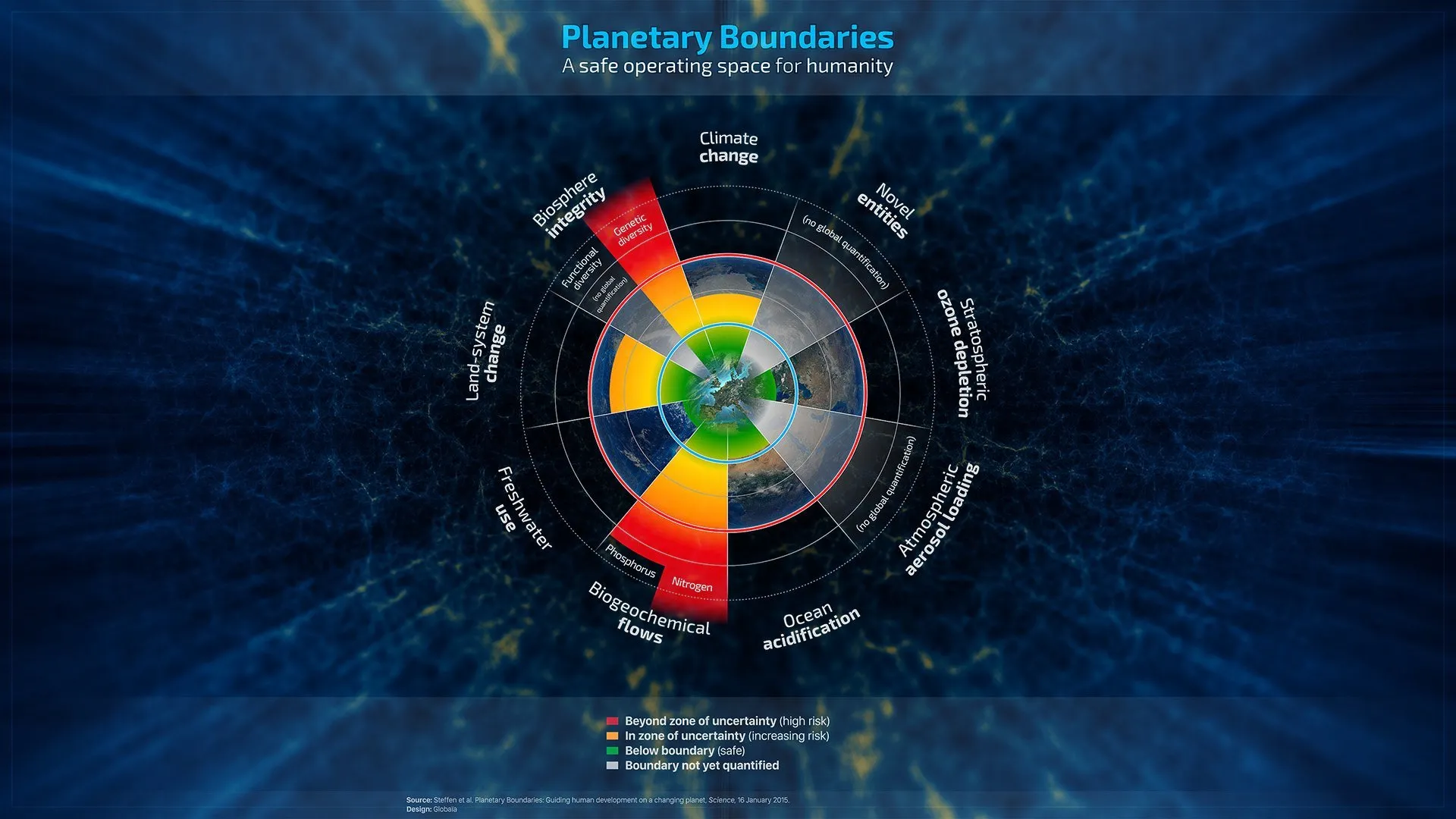
The original Planetary Boundaries diagram (2009) — the framework that started it all.
Planetary Boundaries 2009-2022 | From 3 to 6 boundaries crossed — the evolution of this influential scientific framework over time.
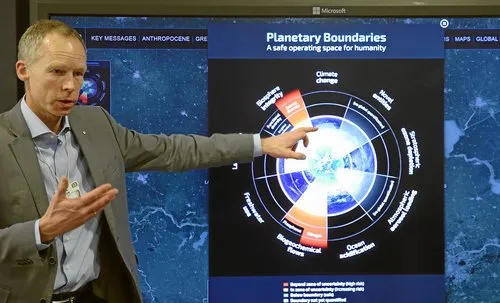
Planetary Boundaries — visualisation of Earth’s safe operating space.
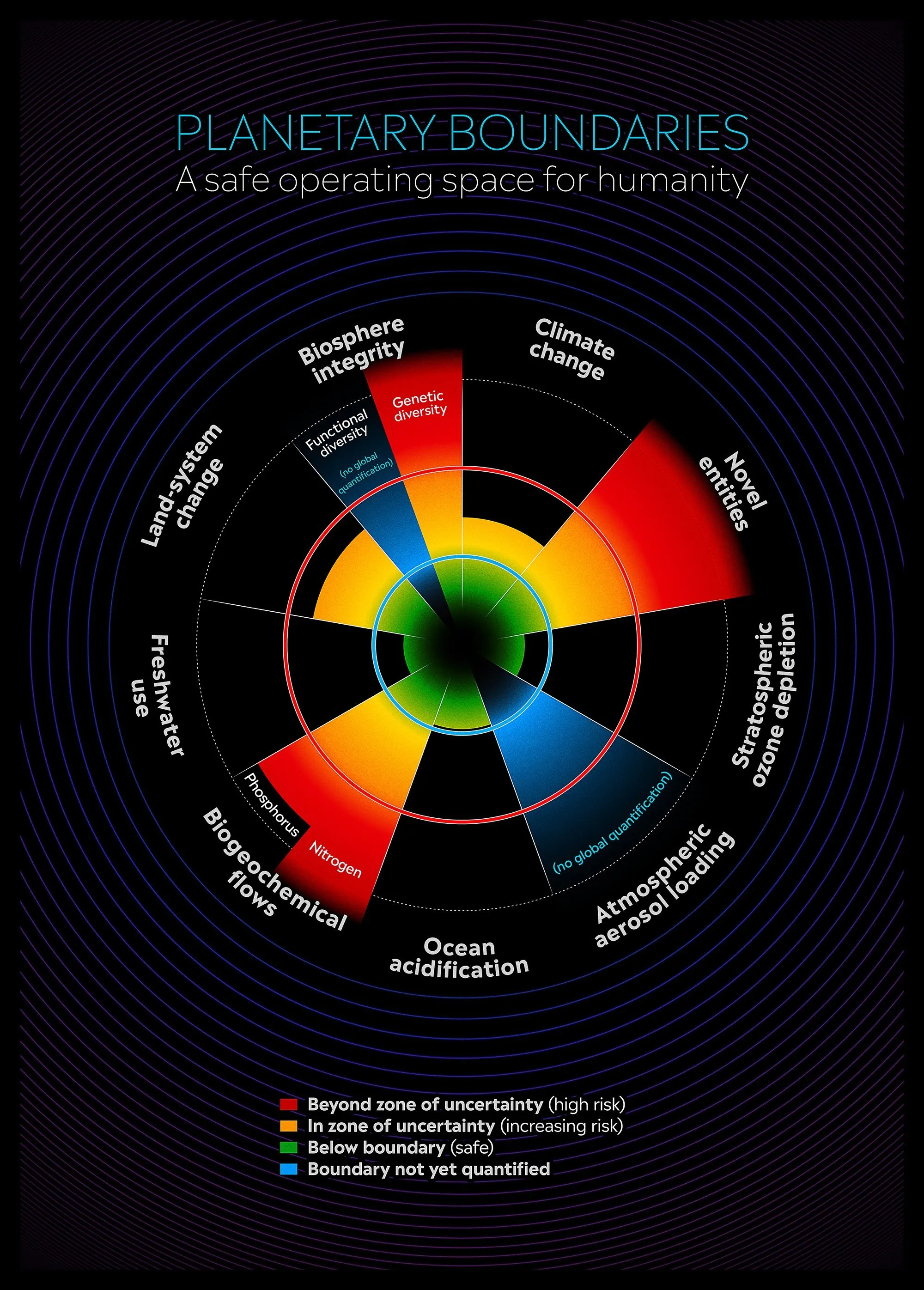
Planetary Boundaries (2022 update).
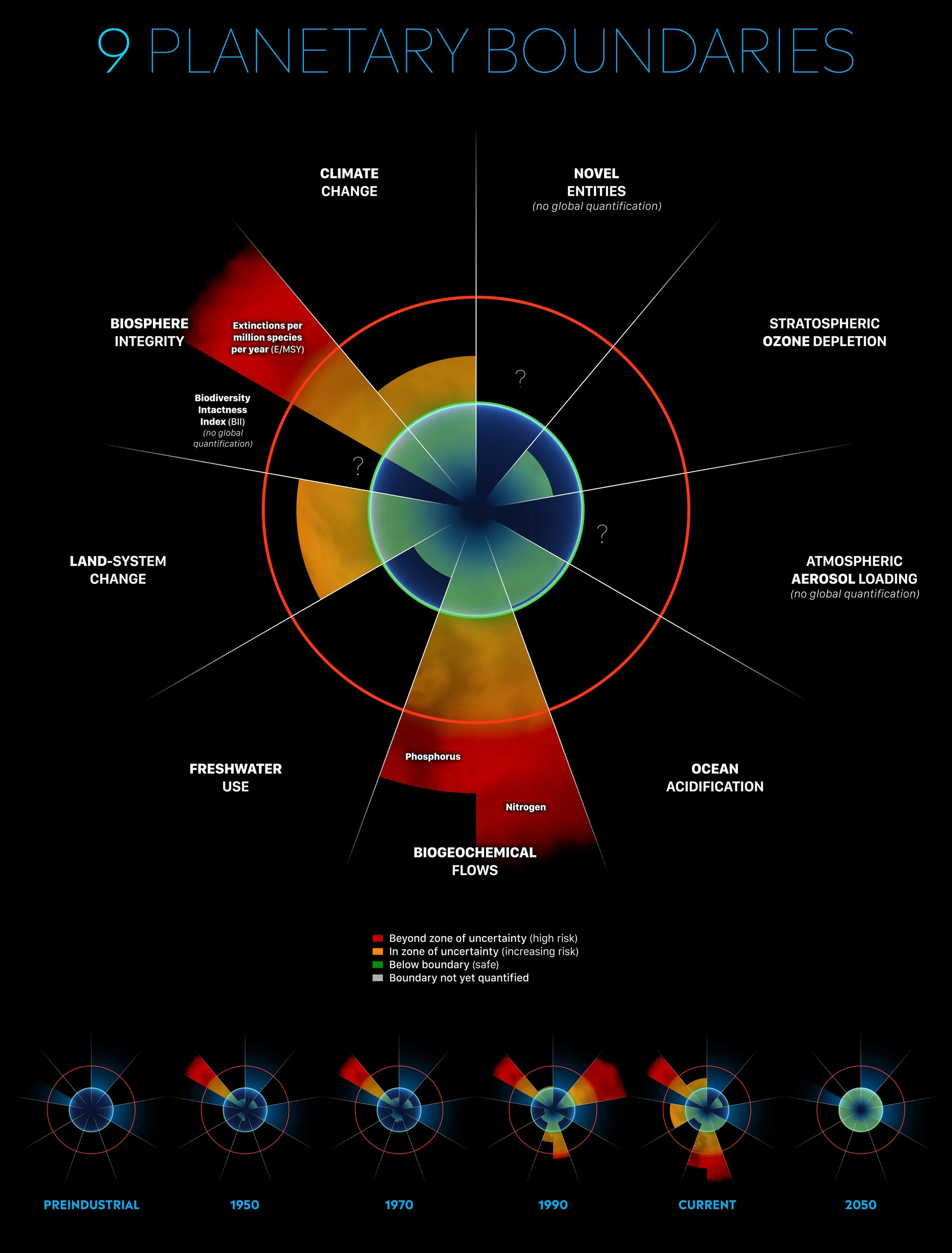
The nine planetary boundaries and their interconnections.
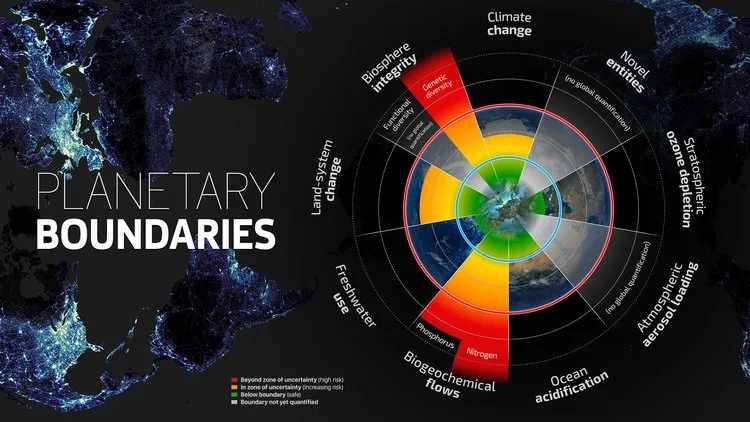
The Planetary Boundary System — how all nine boundaries interact.
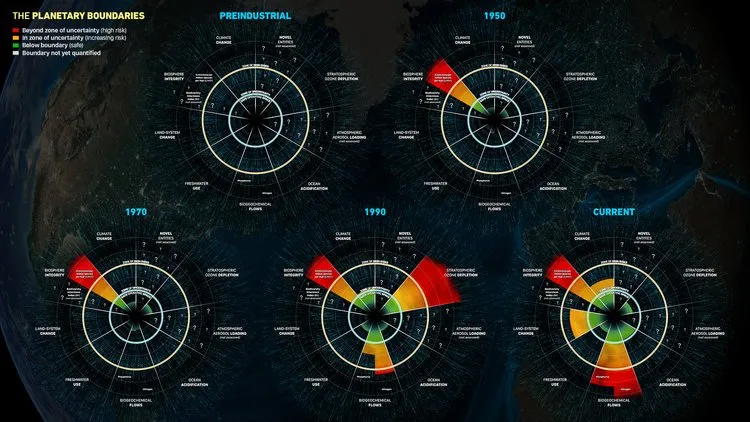
Five planetary boundaries crossed — an earlier assessment showing increasing transgression.
Ocean pH in 2100 According to projections based on current trends in greenhouse gas emissions and ocean acidification, by 2100, the global average ocean pH is expected to decrease by 0.3-0.4 units, resulting in a more acidic marine environment. This significant shift in ocean chemistry, driven primarily by increased absorption of anthropogenic carbon dioxide, will have profound impacts on marine ecosystems, biodiversity, and the overall health of the world’s oceans, posing significant challenges to the sustainability of our planet’s marine life and resources.
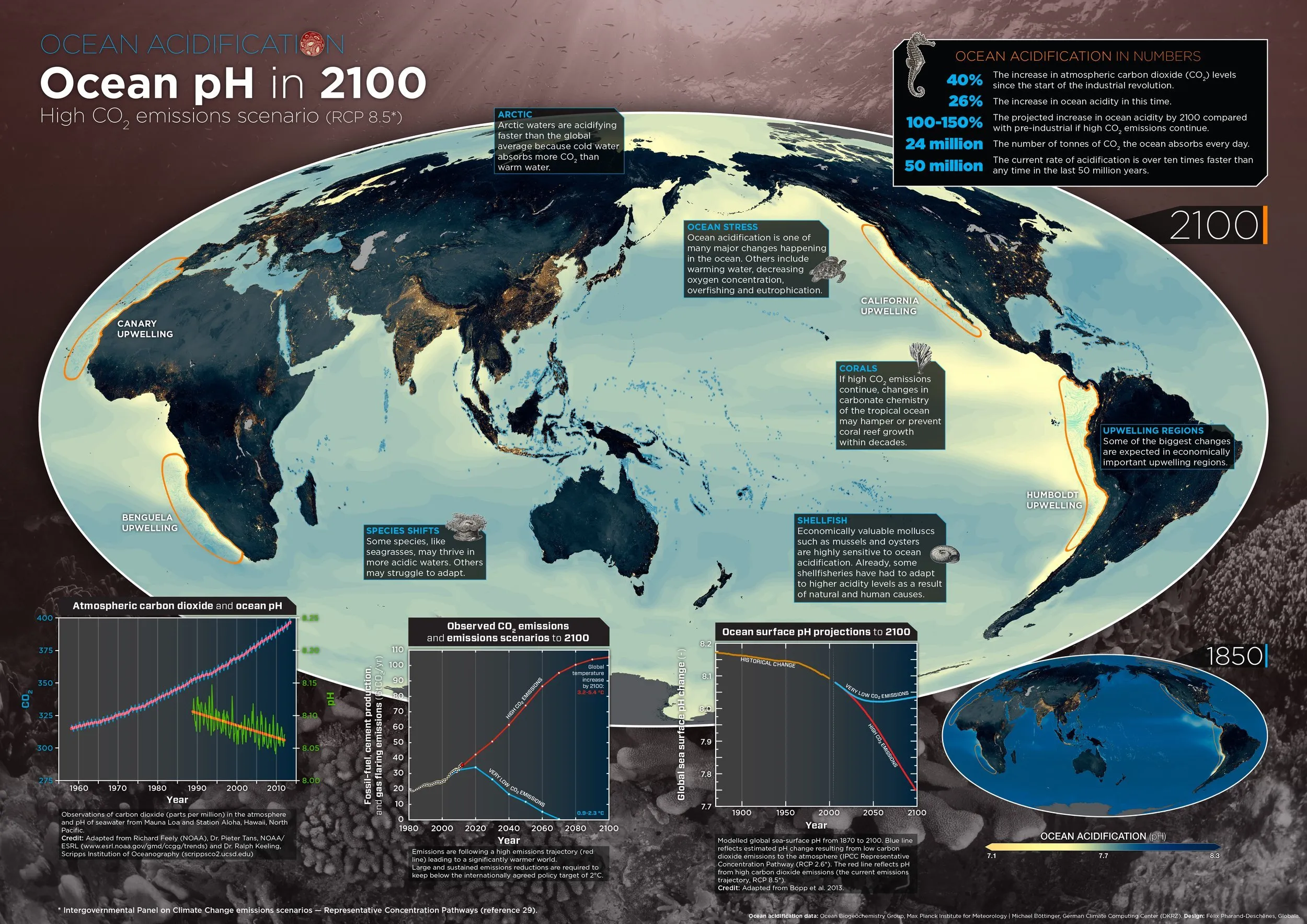
Projected ocean pH in 2100 — a more acidic marine environment with profound impacts on marine ecosystems.
Aragonite saturation in 2100 Aragonite saturation is a key parameter in ocean chemistry that reflects the concentration of aragonite, a form of calcium carbonate, in seawater. It is an essential measure of the ability of marine organisms, such as shellfish, corals, and some plankton, to build and maintain their shells or skeletons. Projections for 2100, based on various emission scenarios, suggest that the global average aragonite saturation state will continue to decline.
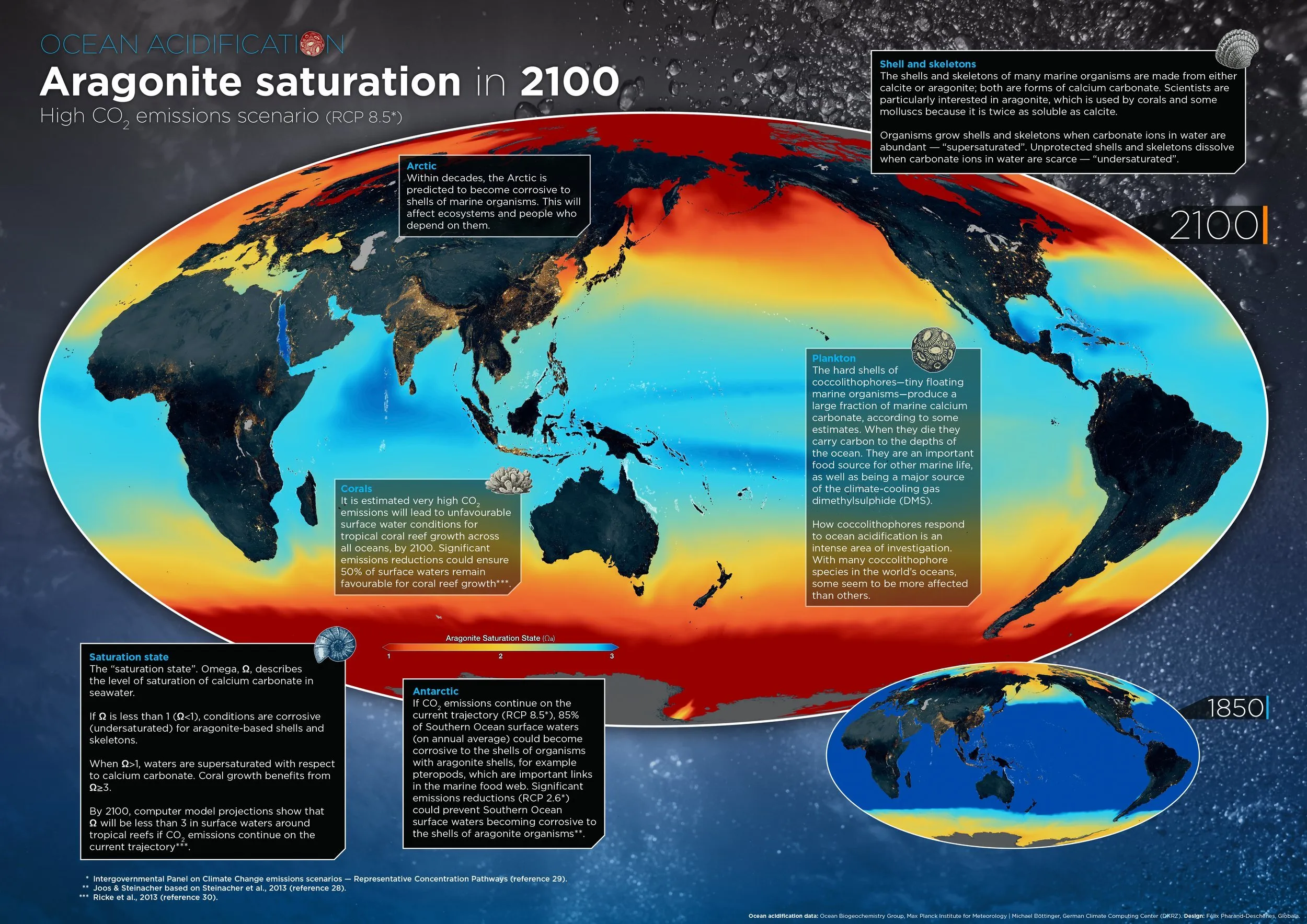
Projected aragonite saturation in 2100 — declining calcium carbonate levels threaten marine organisms’ ability to build shells and skeletons.
🌐 Explore Planetary Boundaries - Interactive → — Interactive donut chart, status grid, and detailed control variable breakdowns for all 9 planetary boundaries.
Take a deep breath.
Six of nine planetary boundaries have been crossed. Understanding precedes transformation.