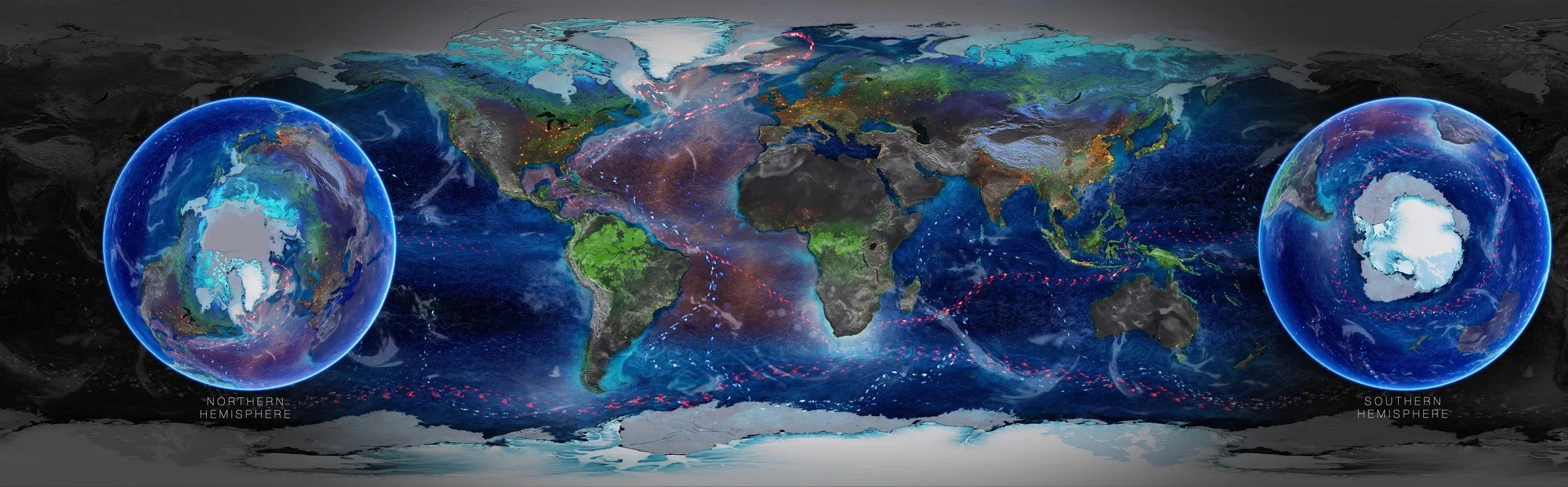
Last updated: September 18, 2023
In Brief
Earth Commission · Global Commons Alliance · Future Earth
Earth System Boundaries
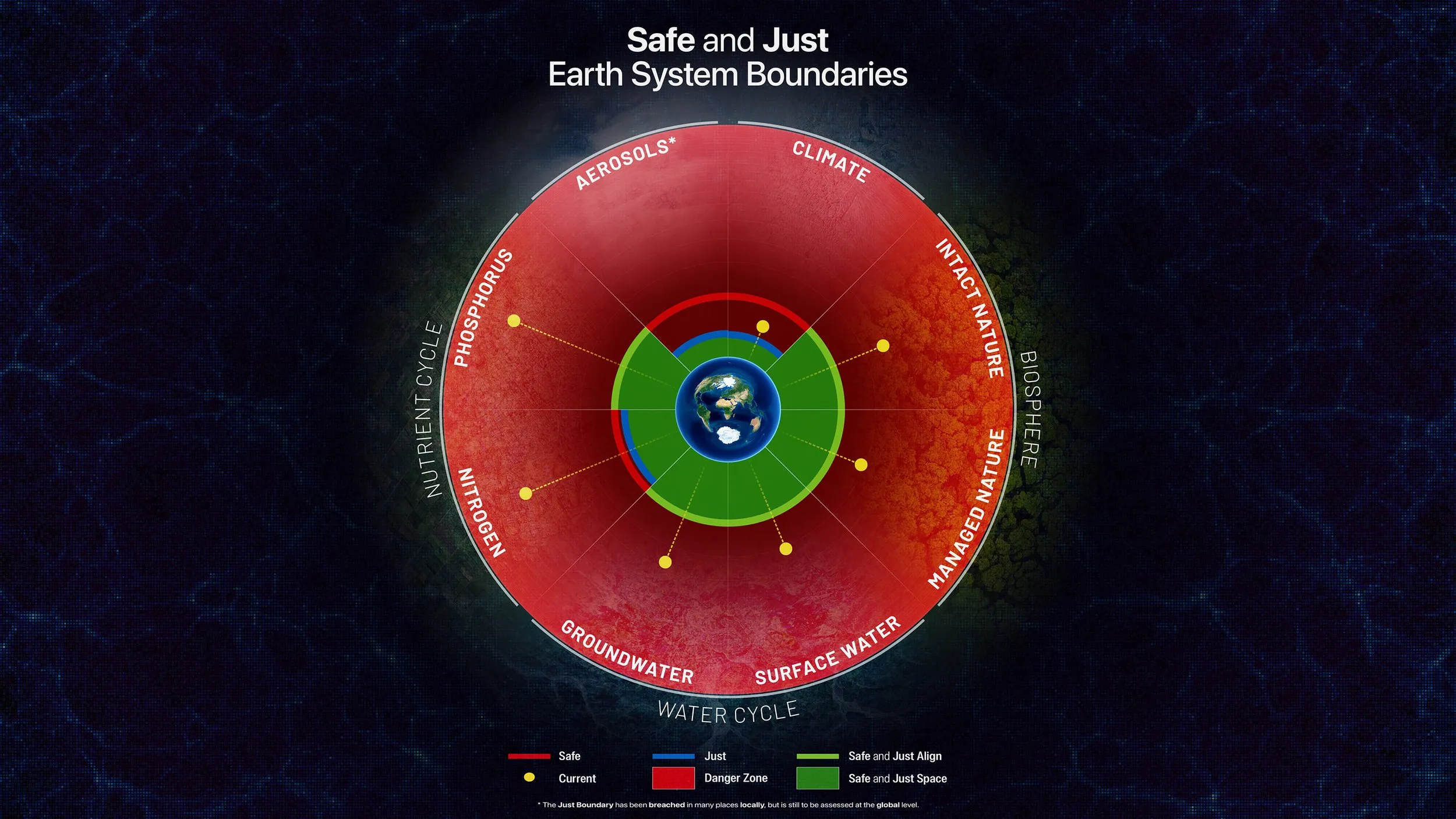
The stability of the Earth system and human well-being are inseparably linked, yet their interdependencies have long been treated separately. The Planetary Boundaries framework identified the biophysical thresholds that keep the planet in a stable, Holocene-like state — but remaining within those limits does not, on its own, guarantee justice. Biophysical boundaries are not inherently just: strict environmental limits, such as reducing emissions or setting aside land for nature, can reduce access to food, water, energy and land for vulnerable people. The Earth Commission, an independent scientific body hosted by Future Earth and the Global Commons Alliance, set out to address this gap through a multi-year collaboration between natural and social scientists from the Global North and South.
Earth system justice
At the heart of this work is the concept of Earth system justice — an integrated framework that reduces the risks of global environmental change (safe) while ensuring well-being and an equitable sharing of nature’s benefits, risks and responsibilities among all people (just), within Earth system boundaries that provide universal life support.
The framework rests on three overarching justice dimensions, called the “3 Is”:
Interspecies justice
Rejecting human exceptionalism — recognising that we are guardians of the natural world, and preventing significant harm to other species and ecosystems.
Intergenerational justice
Obligations across time — have past emissions already caused significant harm, and are we minimising the harm we leave to those not yet born?
Intragenerational justice
Fairness between countries, communities and people alive today — through an intersectional lens on how gender, race, age, class and health compound vulnerability.
Earth system justice also works across several interlocking dimensions. It distinguishes between procedural justice (fair access to information, decision-making, civic space and courts) and substantive justice (access to minimum resources and services, reduction of harm, and equitable allocation of remaining resources, risks and responsibilities) — and adds recognition and epistemic justice (valuing diverse peoples and knowledge systems) and structural justice (confronting the skewed power relations, GDP-driven economic models and unaccountable harm that entrench inequality). Together these dimensions guide the identification of both just ends — boundaries and access levels that reduce significant harm — and just means — the transformations in governance, technology, consumption and economic systems needed to achieve them. In the Commission’s framing, justice is not a normative add-on but a structural condition for planetary stability and resilience.
Safe and just Earth system boundaries
The Commission quantified eight safe and just Earth system boundaries across five domains: climate, the biosphere (natural ecosystem area and functional integrity), freshwater (surface water and groundwater), nutrient cycles (nitrogen and phosphorus), and aerosols and air pollution. For each domain, safe boundaries are set to maintain Earth system resilience and avoid triggering tipping points, while just boundaries are set to minimise significant harm — defined as widespread, severe, existential or irreversible negative impacts on people, communities, countries and the more-than-human world.
A crucial finding is that justice considerations often make boundaries more stringent than safety alone. For climate, for example, the safe boundary of 1.5 °C still exposes tens of millions of already vulnerable people to unprecedented heat; the just boundary is set at 1.0 °C. For aerosols and air pollution, local health standards impose limits well below the safe regional boundary. In three cases — climate, nitrogen and aerosols — the just boundaries turn out to be tighter than the safe ones, meaning that even a “safe” Earth system is not necessarily a just one.
Seven of the eight globally defined safe and just boundaries have already been transgressed. At the local level, in more than half of the world’s land area, at least two boundaries have been crossed — affecting 86 % of the global population. This reality underscores the urgency of systemic transformation. It is also why the Commission’s second phase is now extending the assessment toward all nine planetary-boundary processes — adding the ocean and novel entities to the five domains above.
The safe and just corridor
The space between the floor of minimum access for all people and the ceiling of Earth system boundaries defines what the Commission calls the safe and just corridor — the narrow band within which both people and planet can thrive. The floor represents the level of resources — water, food, energy and infrastructure — needed for all people to live with basic dignity and escape poverty. The ceiling is the more stringent of the safe and just boundaries for each domain. If the floor exceeds the ceiling (when providing minimum access would itself push the system beyond its boundaries), the corridor does not yet exist and can only be created through profound redistribution, technological transformation and systemic change. Meeting the minimum needs of billions who currently lack adequate access will increase pressure on the Earth system — yet the deeper pressure comes from the top: the wealthiest 16 % of the world’s population account for roughly 74 % of global resource consumption. Redistribution from the largest consumers is therefore not optional, but necessary.
The Earth Commission
The Earth Commission is the scientific cornerstone of the Global Commons Alliance. Founded in 2019 and convened by Future Earth — the world’s largest network of sustainability researchers — it assesses and synthesises the best available science to define the boundaries of a safe and just planet, and to translate those findings into actionable targets for decision-makers at every scale. Its standing membership of 23 leading natural and social scientists is drawn from across the Global North and South; appointments are honorary and unpaid, and nearly 100 researchers from more than 35 countries have contributed to its work through four interlinked workstreams.
The Commission’s influence reaches well beyond academia. Its science underpins the targets that businesses and cities adopt through the Science Based Targets Network, and has been cited by the UN, the World Bank and the EU. In 2023, Carbon Brief ranked two Earth Commission papers among the ten most influential climate publications in the world; to date its work spans more than 20 peer-reviewed papers, over 4,500 citations and 2,300+ media stories.
That work unfolds in two phases, moving from diagnosis to transformation — from measuring how far we have overshot to charting how the world might actually move back inside the boundaries.
The first quantitative assessment of the safe and just space — the first time just boundaries were ever quantified alongside safe ones.
Charting the transformational course — completing the framework, modelling tipping points, and mapping pathways to a safe and just future.
Charting the course: the second phase (2024–2027)
We are, today, far outside the safe and just space — and incremental fixes will not be enough. The Commission’s second phase therefore shifts from measuring the gap to closing it: filling critical knowledge gaps, updating boundaries as the science advances, and mapping the deep transformations in energy, food, governance and economics needed to live within a safe and just operating space. Seven strands of work define this phase.
Completing the framework: the ocean and novel entities
Phase one quantified boundaries for five domains. Phase two extends the assessment toward all nine planetary-boundary processes by tackling the two that remain unassessed.
Novel entities — manufactured chemicals, plastics and materials that never existed in nature — have proliferated since the mid-twentieth century, even as scientific and regulatory oversight has thinned. The Commission will first set boundaries for the “known knowns,” using existing regulatory safety thresholds and a life-cycle view from extraction to disposal, while a horizon-scanning effort — drawing on machine learning and large language models — searches for the emerging or overlooked substances (“unknown knowns”) that tomorrow’s boundaries will need to capture.
Ocean change is the other frontier. The ocean covers more than 70 % of the planet, absorbs much of our heat and carbon, and feeds billions through “blue foods” — yet it faces fisheries collapse, acidification, deoxygenation, warming and a surge of competing claims now called the “blue acceleration.” The Commission is identifying ocean control variables — marine biogeochemical cycles, acidification and deoxygenation, marine biomass and fisheries — and, guided by an emerging literature on “blue justice,” asking what fair boundaries look like from the sea, where the risk of crossing tipping points such as a shutdown of the Atlantic overturning circulation (AMOC) is rising.
Boundaries that interact
The Earth system is a connected whole: approaching one boundary presses on the others. A warming climate erodes the biosphere’s resilience, which in turn weakens nature’s capacity to absorb carbon — a feedback that can shrink the safe operating space faster than any single trend suggests. But the interactions cut both ways: well-placed reforestation can serve climate and biosphere goals at once, while large-scale biofuel cultivation can cut emissions yet degrade ecosystems. Phase two systematically maps these cross-boundary feedbacks — the cascades to avoid and the synergies to seek. The same interacting tipping points and climate corridors that GLOBAÏA visualises elsewhere are, in effect, this story told one system at a time.
Making risk visible: “burning ember” diagrams
To communicate all of this, the Commission is developing “burning ember” diagrams — a visual tool adapted from the IPCC that shows how risks to both biophysical and human systems intensify as we approach or cross each safe and just boundary. The aim is a consistent, intuitive picture of escalating danger that decision-makers and the public can read at a glance.
A floor and a ceiling: minimum access, deepened
The first phase defined a floor of minimum access — the water, food, energy and infrastructure needed to escape poverty and live with dignity. Phase two broadens that floor to include education, healthcare, digital connectivity and other basic needs, and resolves it into three levels: a dignity level (escaping poverty), a Decent Living Standards level (a socially and ecologically viable foundation for flourishing), and — for the first time — an upper level that names a ceiling on overconsumption, drawing on ideas of sufficiency and “limitarianism.” Defining a maximum, and not only a minimum, is what makes the arithmetic of a shared planet add up.
Justice as a structural condition: power and inequality
Running through all of this is Earth system justice — which Phase two sharpens and, crucially, operationalises. The work confronts the skewed power relations, GDP-driven economic models and unaccountable harm that entrench inequality, and looks for levers inside existing institutions rather than waiting for new ones: “just-transition conditionalities” attached to IMF lending and debt restructuring, debt-for-nature swaps, tax and trade justice, fair access to green finance, and justice checks built into corporate and city target-setting. Because the wealthiest 16 % of people drive roughly 74 % of resource use, redistribution that simultaneously curbs overconsumption and meets essential needs — “saving two birds with one stone” — is treated not as charity but as a structural necessity.
Modelling tipping points: TIPMIP
Where the safe boundaries sit depends on where the Earth system tips. The Commission helped launch the Tipping Points Modeling Intercomparison Project (TIPMIP) — an international effort to assess, in a standardised way, the thresholds and feedbacks of key tipping systems: the Greenland and Antarctic ice sheets, permafrost, the AMOC, and boreal and tropical forests. By comparing many models, TIPMIP narrows the uncertainty around the critical temperatures at which these systems may tip — the same dynamics GLOBAÏA maps in the Tipping Points Interactive and tracks live in The Planetary Observatory.
From boundaries to action: translation and transformation pathways
Finally, Phase two turns boundaries into something actors can use. Cross-scale translation breaks a global limit into context-specific “budgets” for a city, company or country, then asks how the burden of staying within them should be fairly shared — work already feeding the Science Based Targets Network’s methods for climate, water, land and the ocean. And for the first time the Commission will build transformation pathways: time-bound, modelled scenarios — not of “what could happen,” but of “what could be” — that show how energy, food and economic systems might be reshaped to bring humanity inside the safe and just corridor without leaving anyone behind. Securing that future, the Commission concludes, is “not only a scientific and technical challenge — it is a moral and political imperative.”
Our contribution
GLOBAÏA was commissioned by the Earth Commission to give this science a visual voice — a short film and a suite of large-format visualisations created for its public launch, translating the framework into images the world could grasp at a glance.
For the past 12,000 years, our Earth has been in a stable state — one that allows human societies and civilizations to develop and thrive. Today that balance is at risk. This short film introduces the science of planetary boundaries, the limits that keep Earth safe and resilient. But safety alone isn’t enough. We must also ensure justice, especially for those most vulnerable to harm. Watch to learn how the Earth Commission is helping chart a path to a safe and just world for all.
Launch at Davos 2023
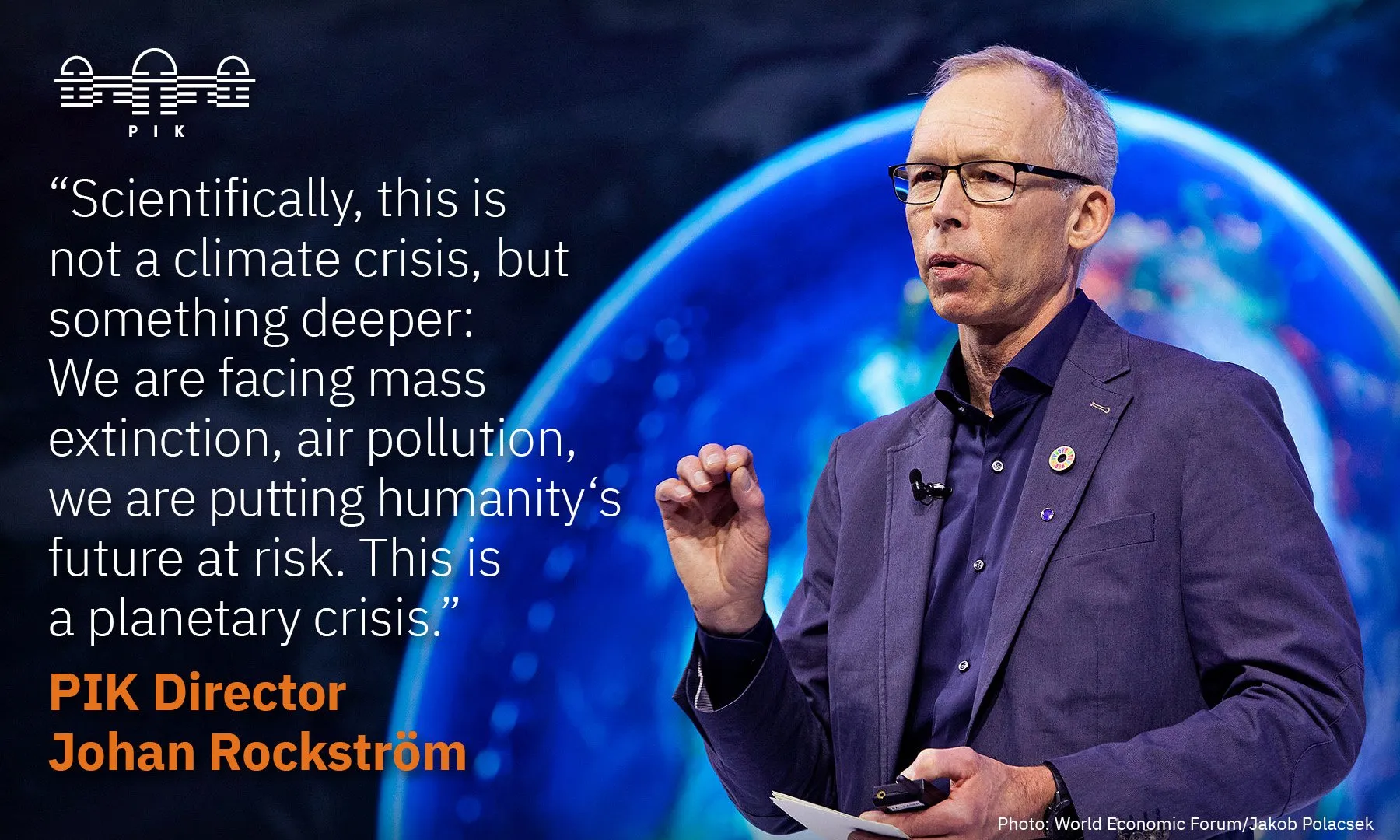
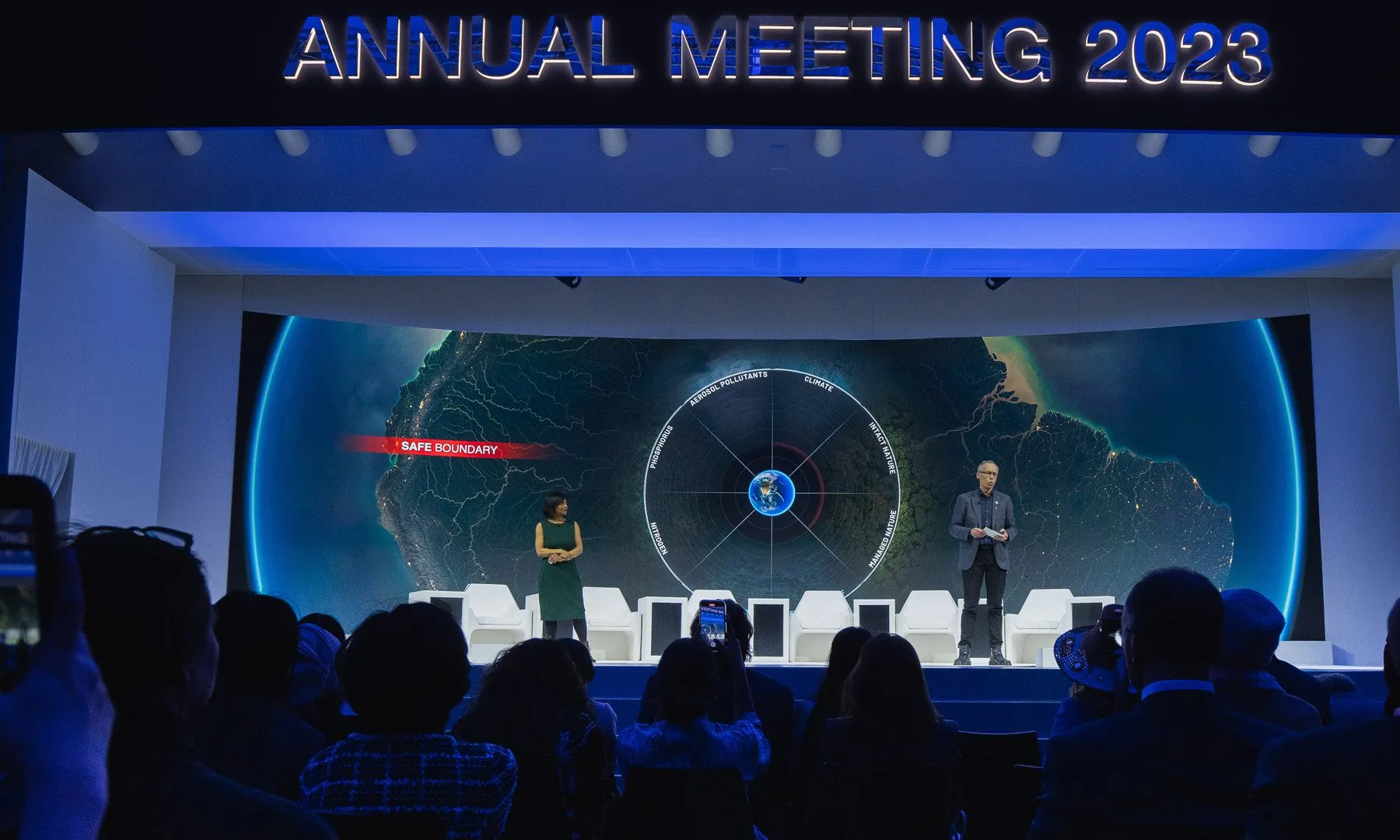
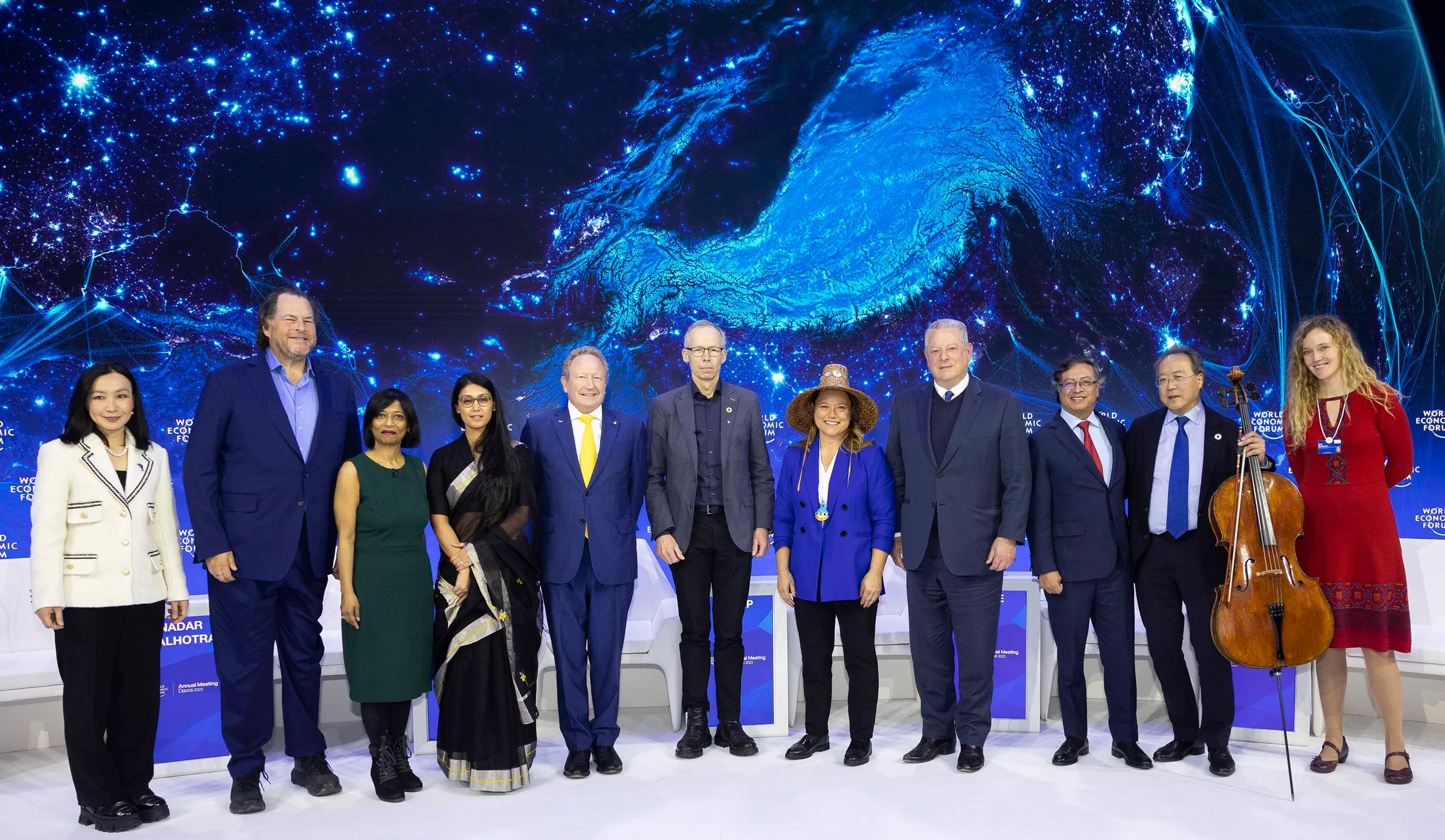
Our large-format visualisations supported the presentation by Johan Rockström and Joyeeta Gupta at the World Economic Forum 2023, effectively conveying the significance of recognising and addressing, for the first time, both biophysical boundaries (safe) and human well-being and justice (just).
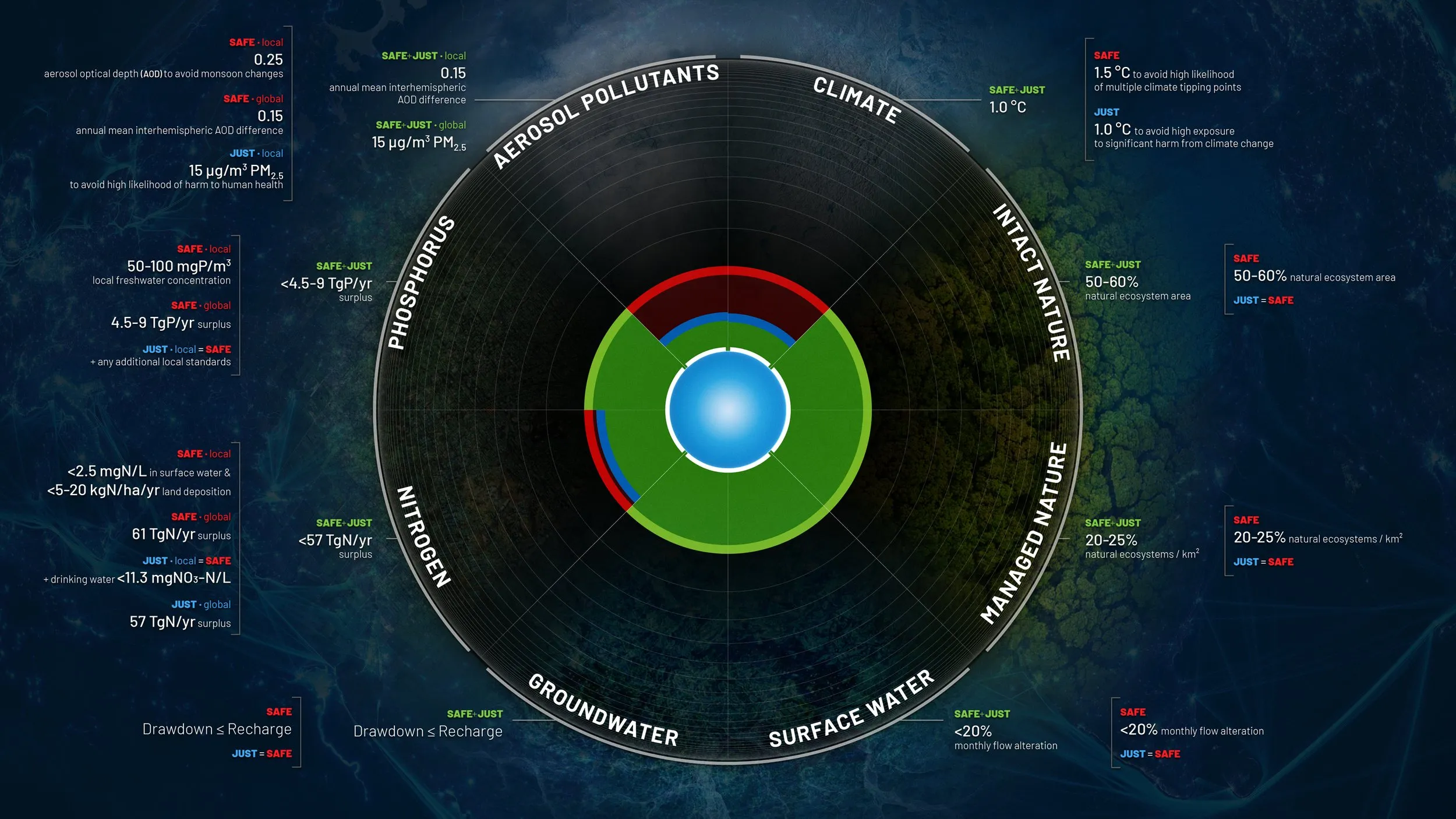
Adapted from: Rockström, J., Gupta, J., Qin, D. et al. Safe and just Earth system boundaries. Nature (2023). https://www.nature.com/articles/s41586-023-06083-8
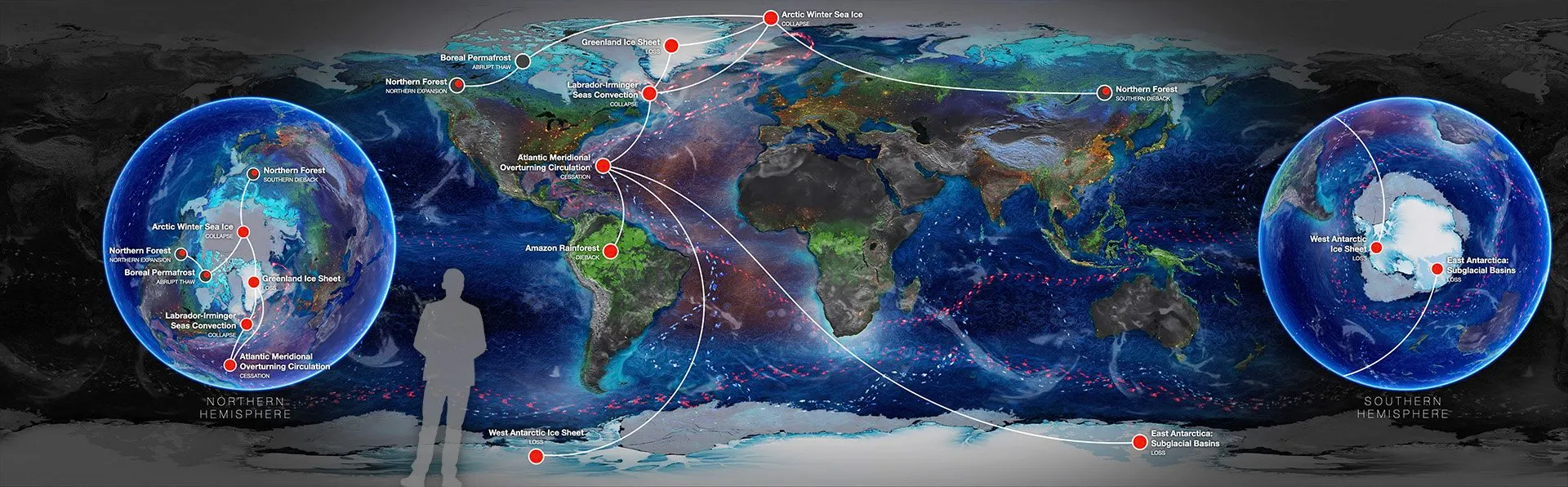
World Economic Forum 2023 · Plenary Screen | Interconnected Tipping Elements
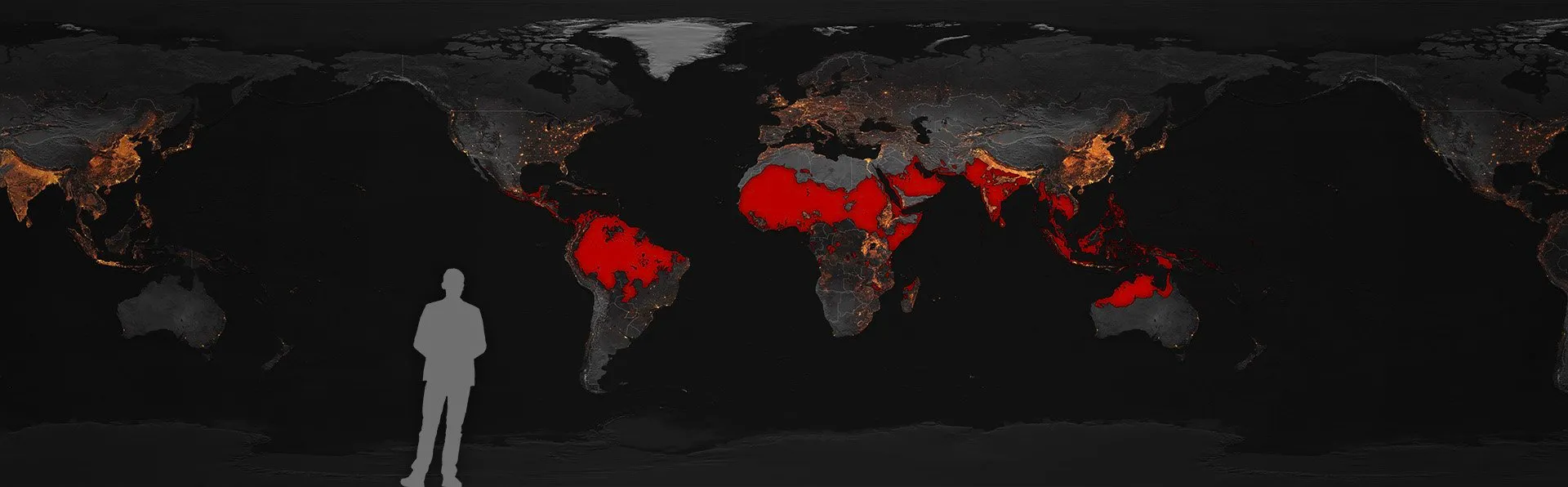
World Economic Forum 2023 · Plenary Screen | Human Climate Inhospitality by 2070 (RCP8.5)
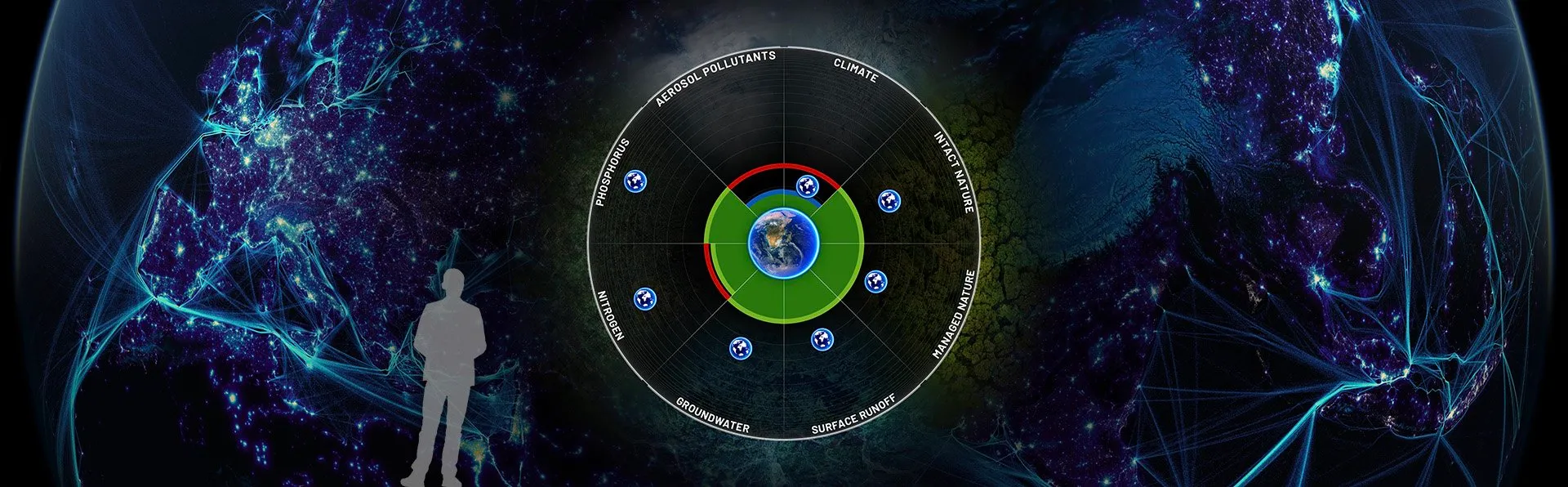
World Economic Forum 2023 · Plenary Screen | Earth System Boundaries (Safe & Just Boundaries)
Global Risk Landscape — World Economic Forum 2023
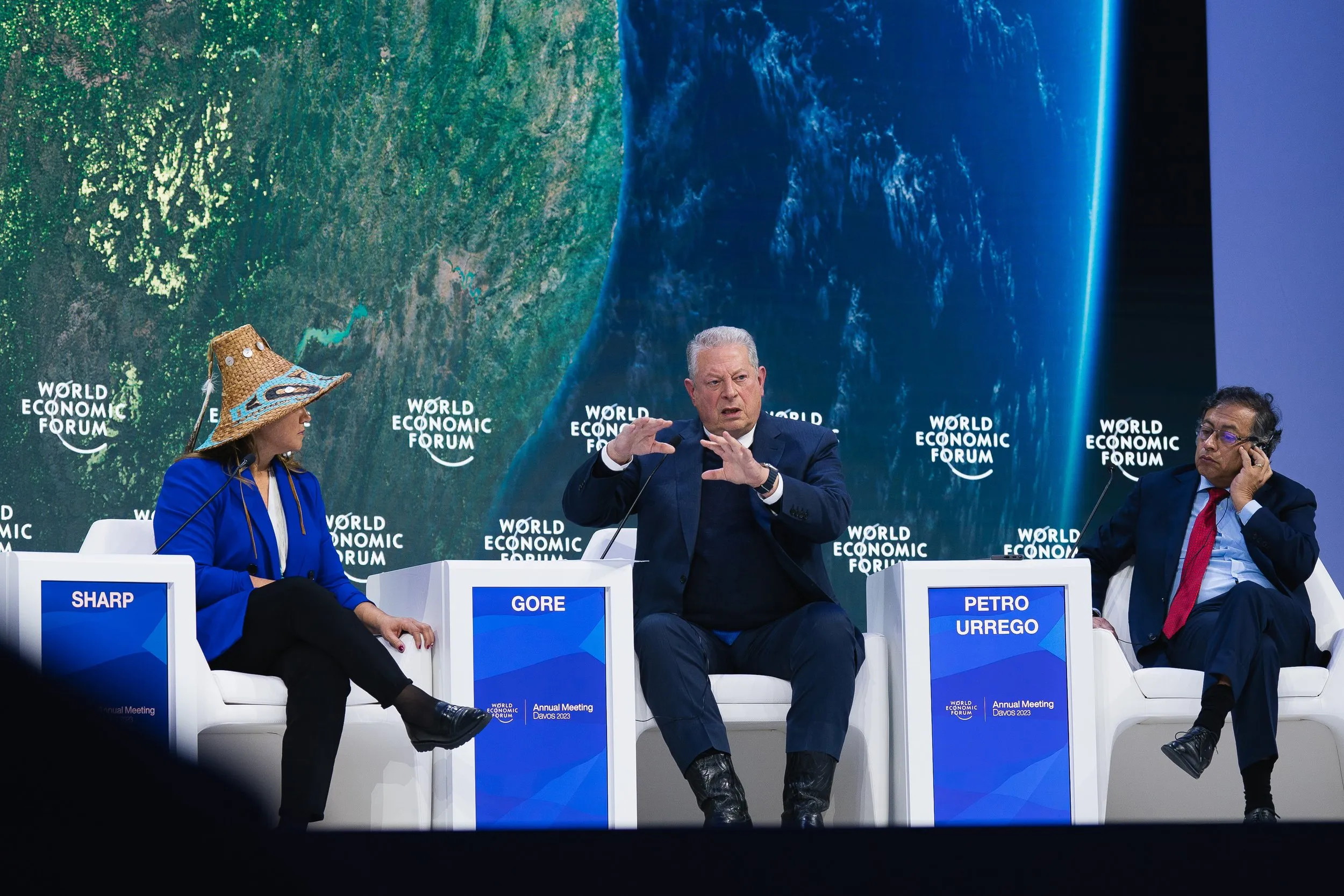
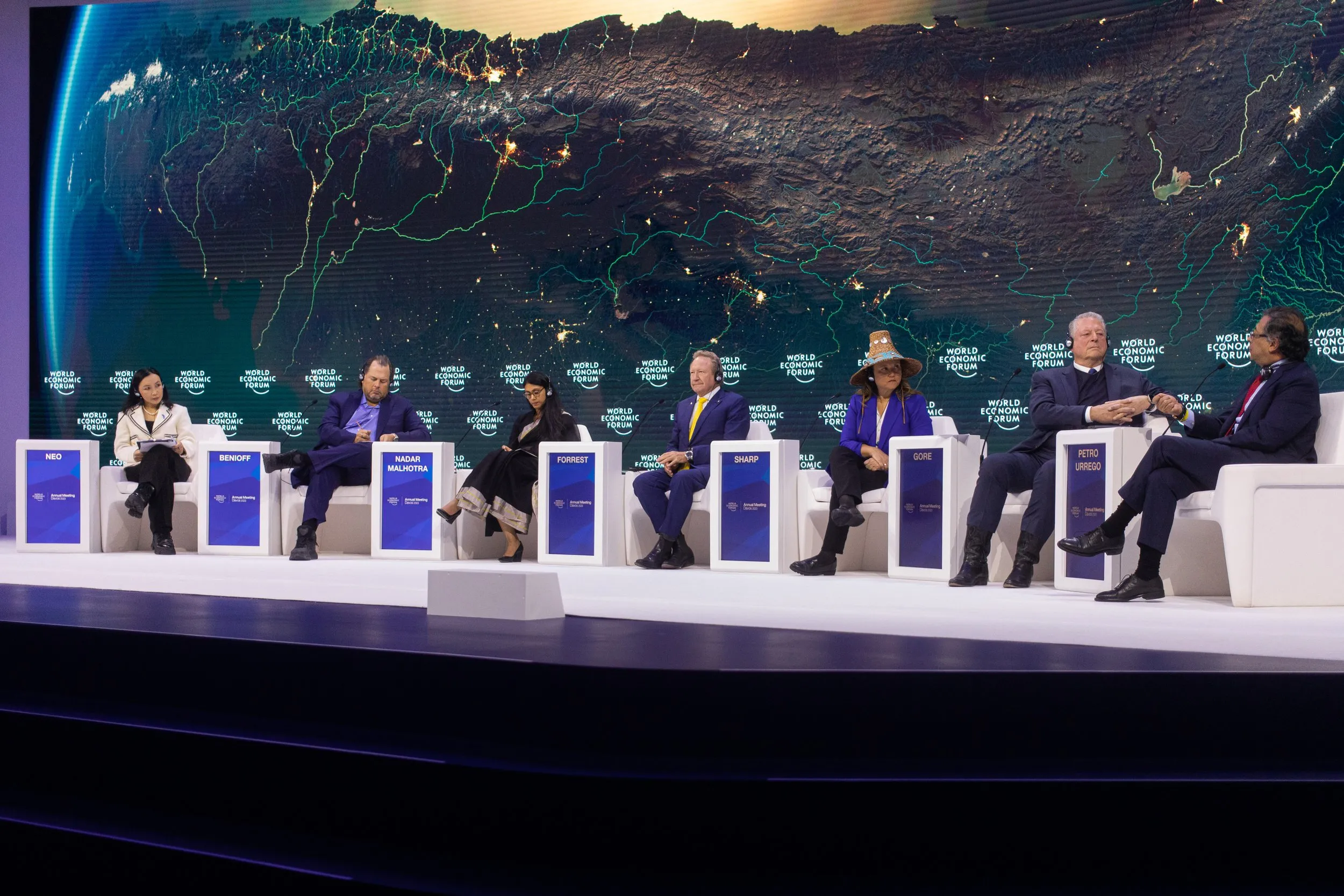
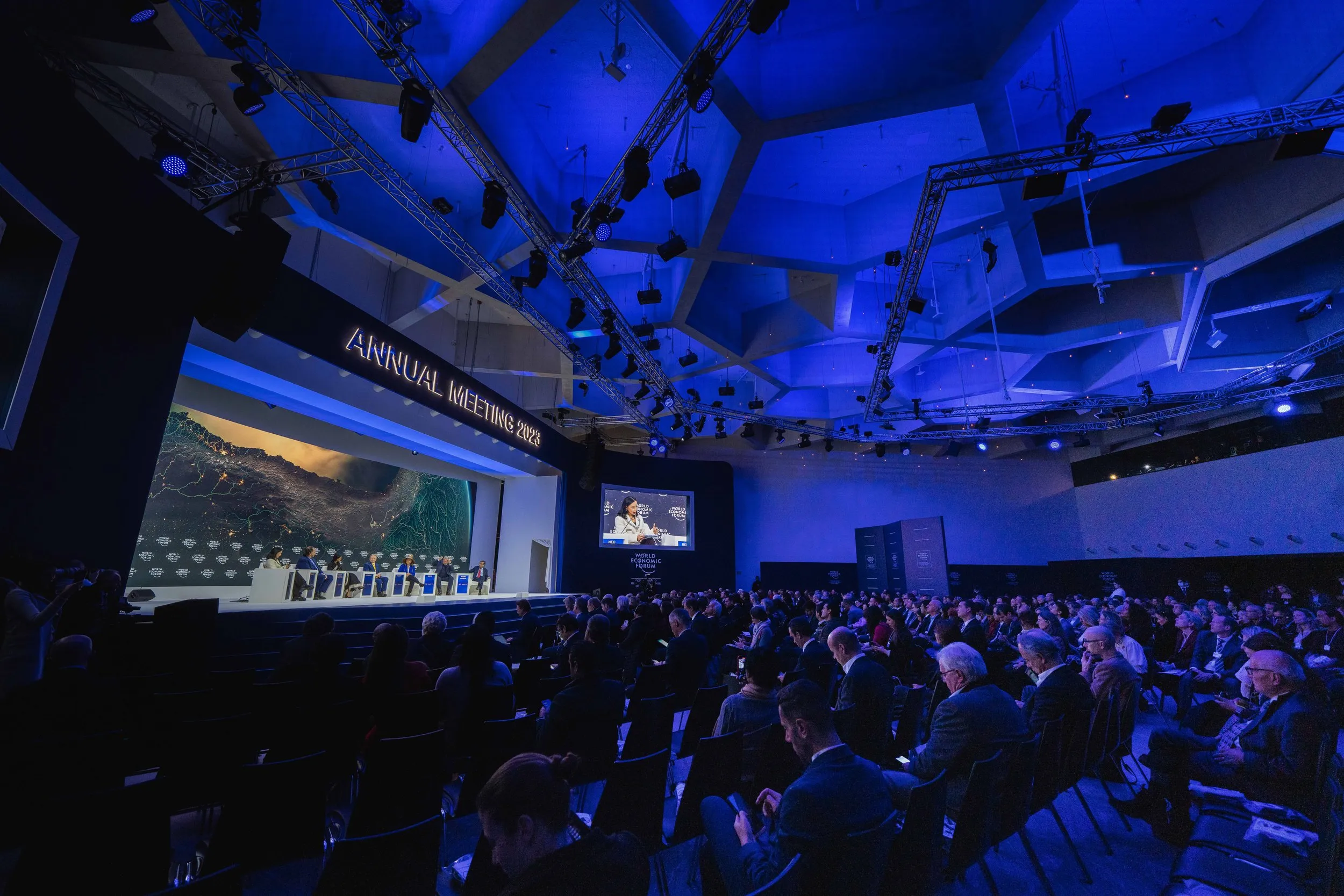

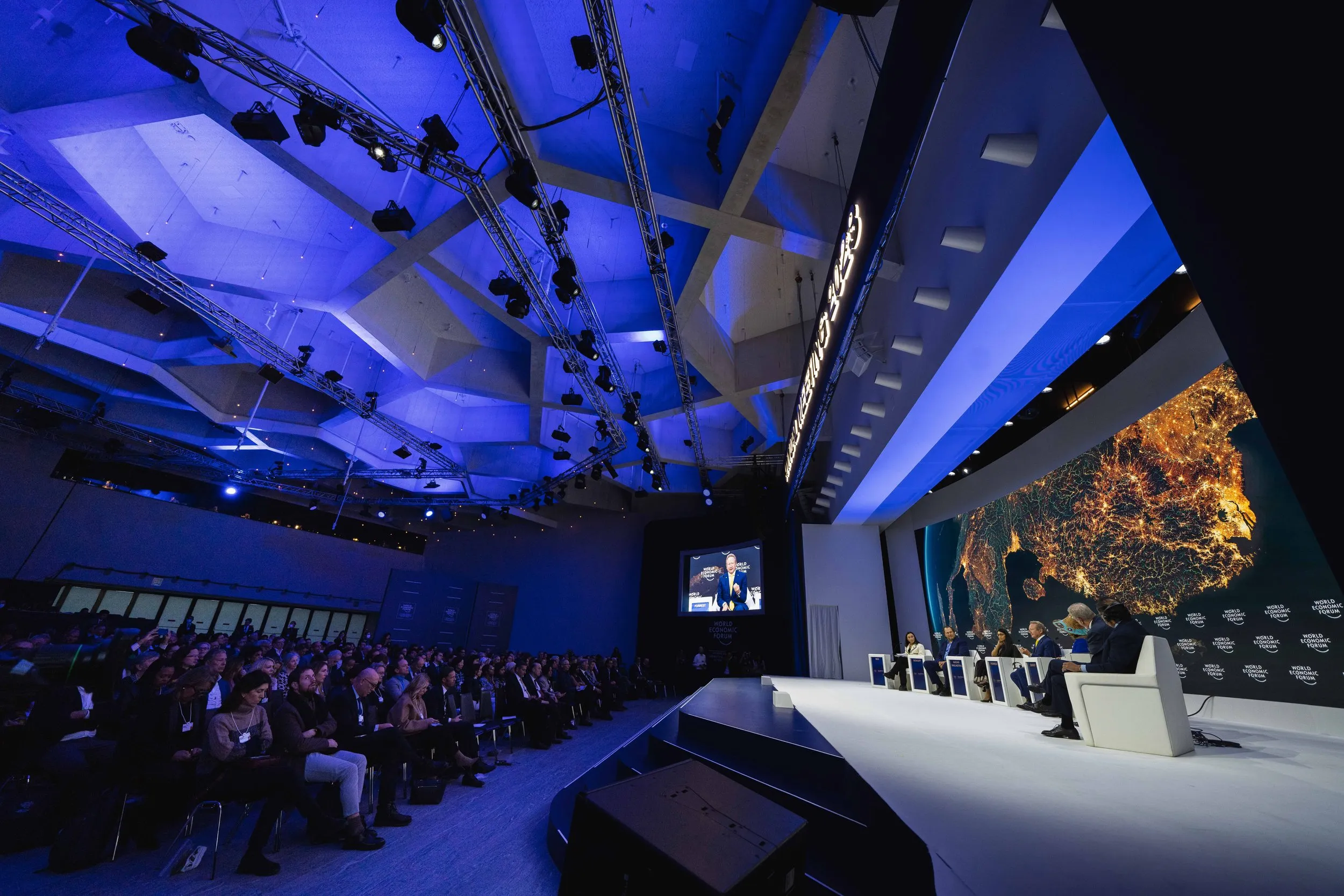
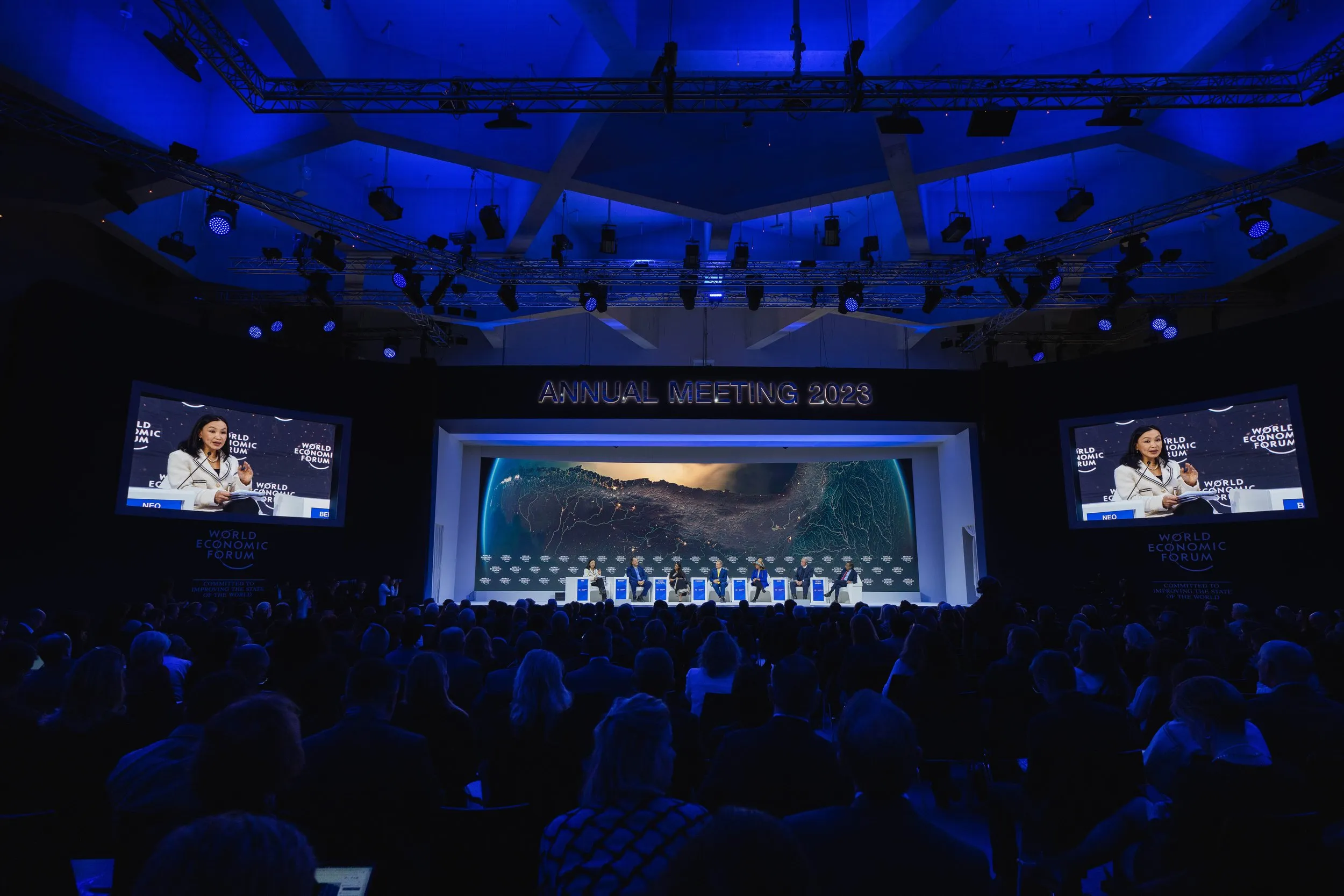

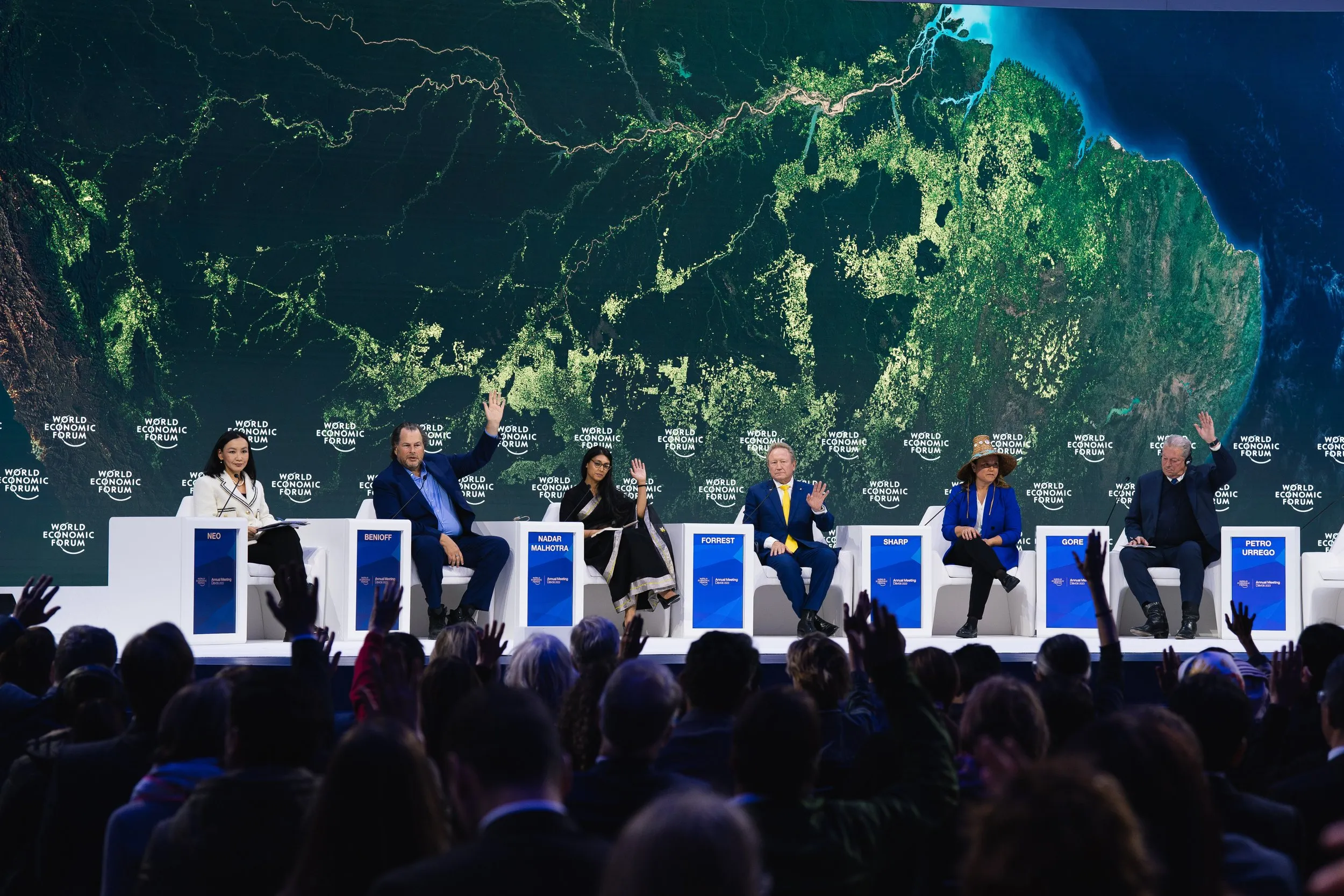
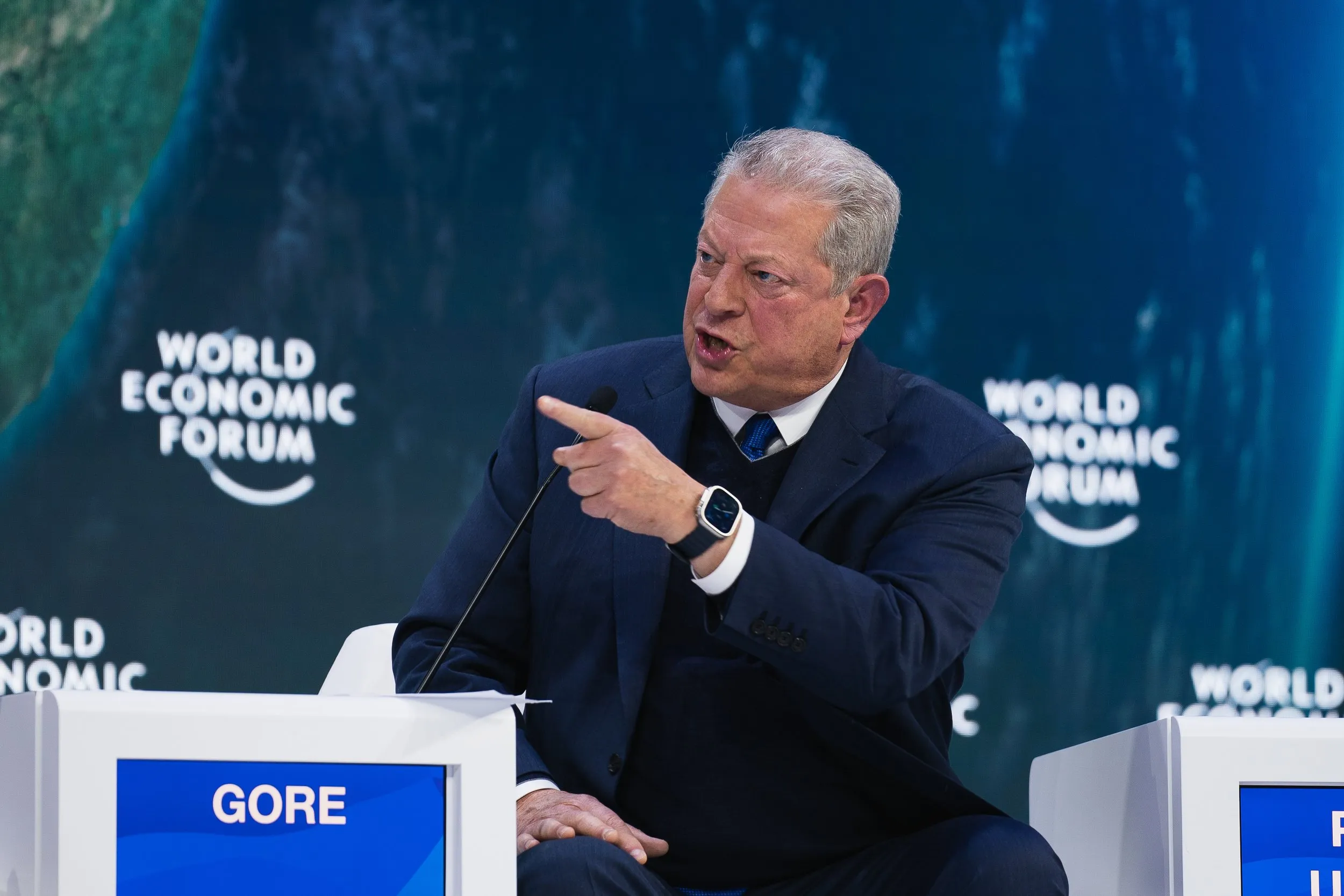
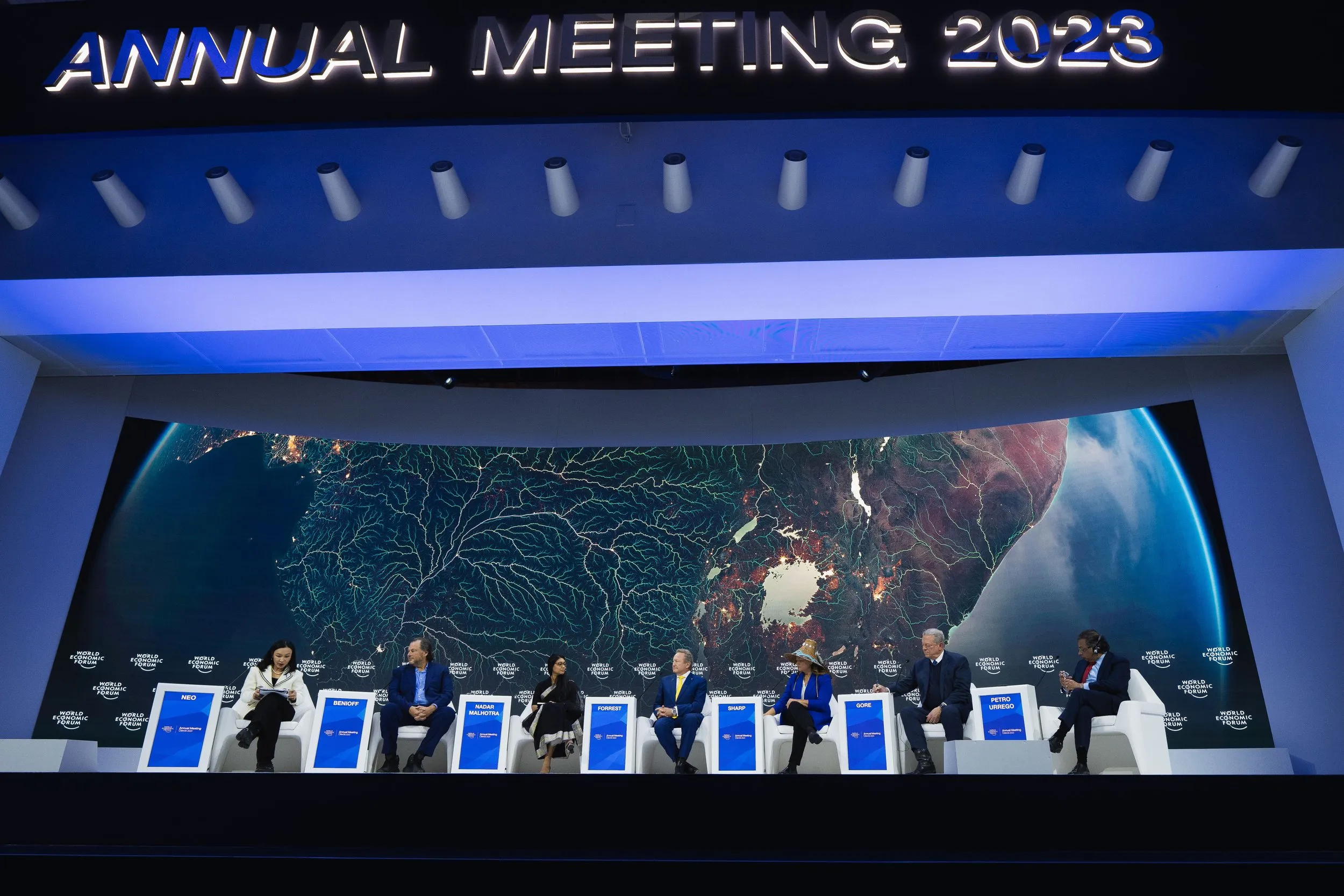
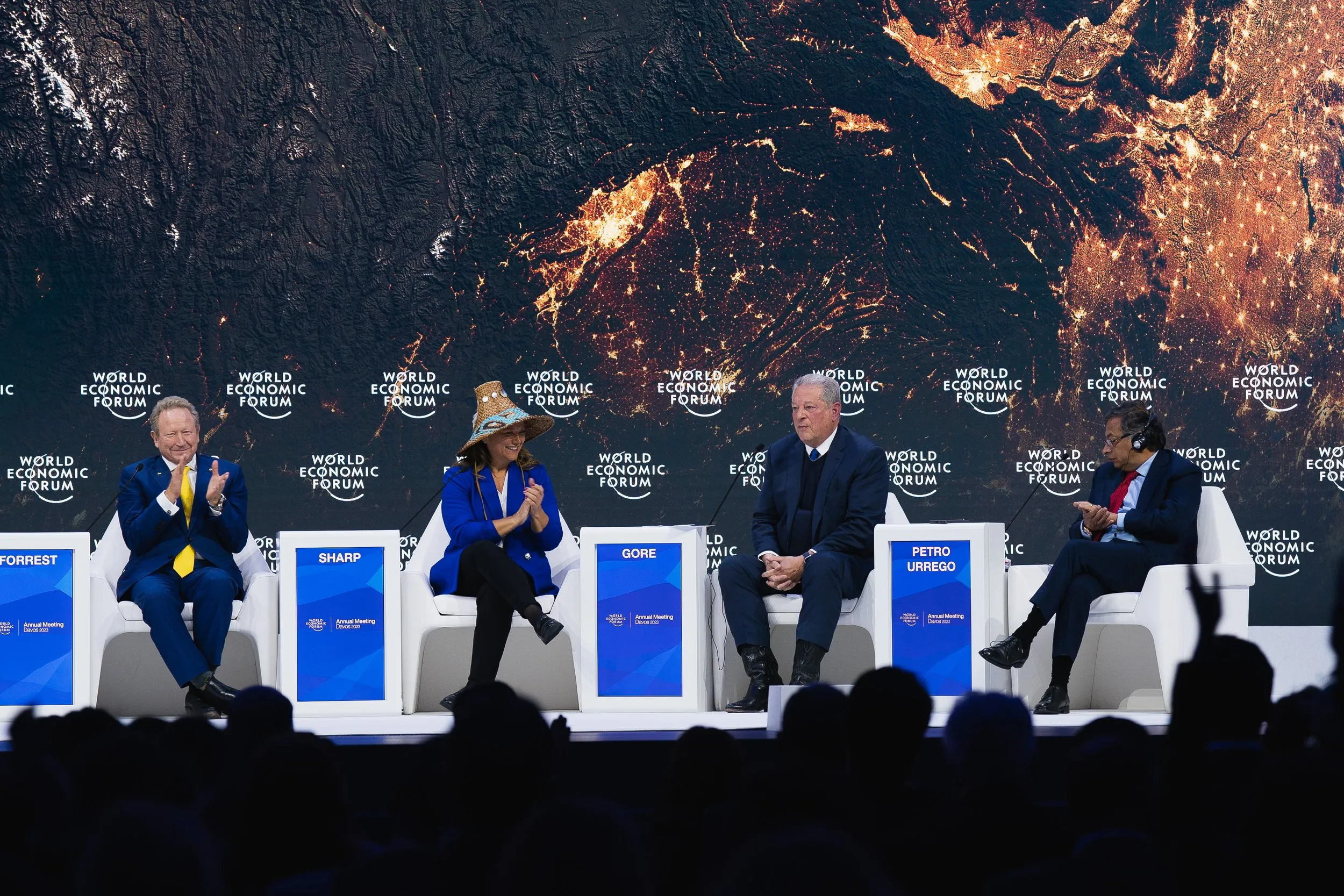

GLOBAÏA visualisations presented at the World Economic Forum 2023 in Davos
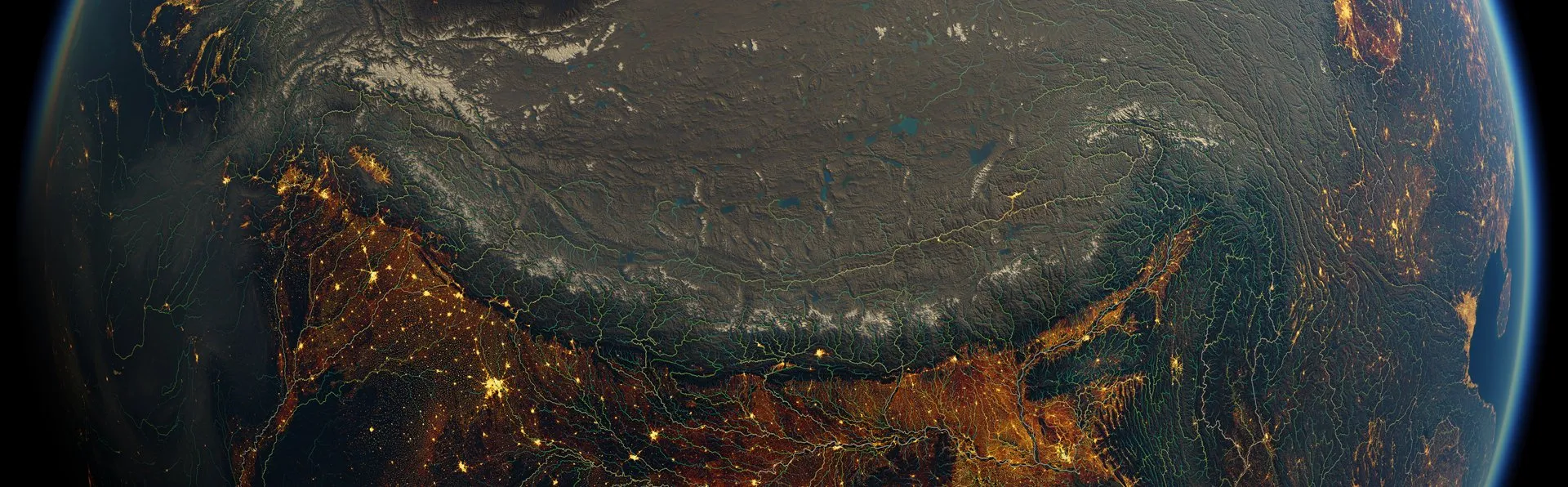
GLOBAÏA team at the World Economic Forum 2023
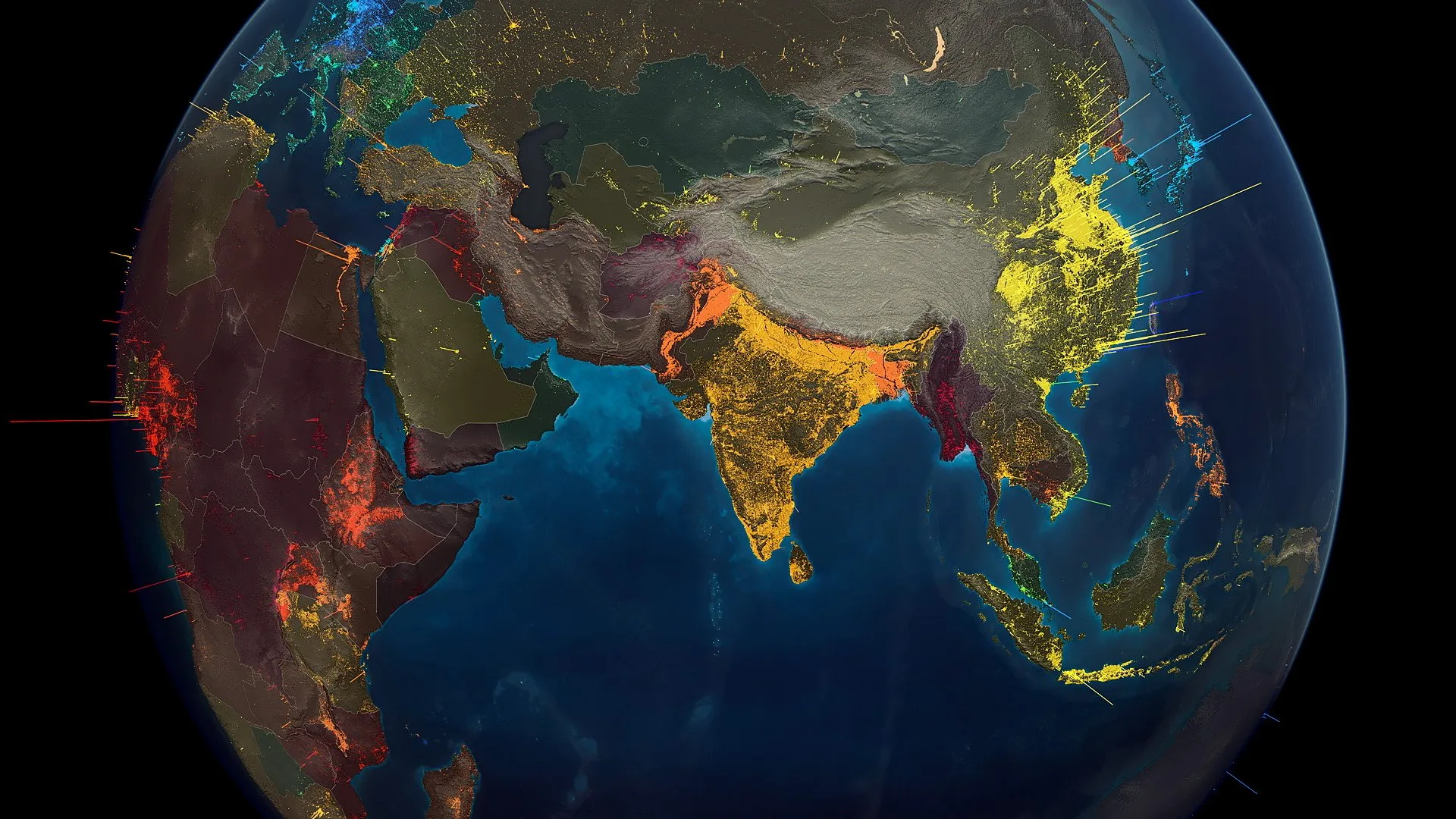
Fragile States — Global vulnerability and instability assessment
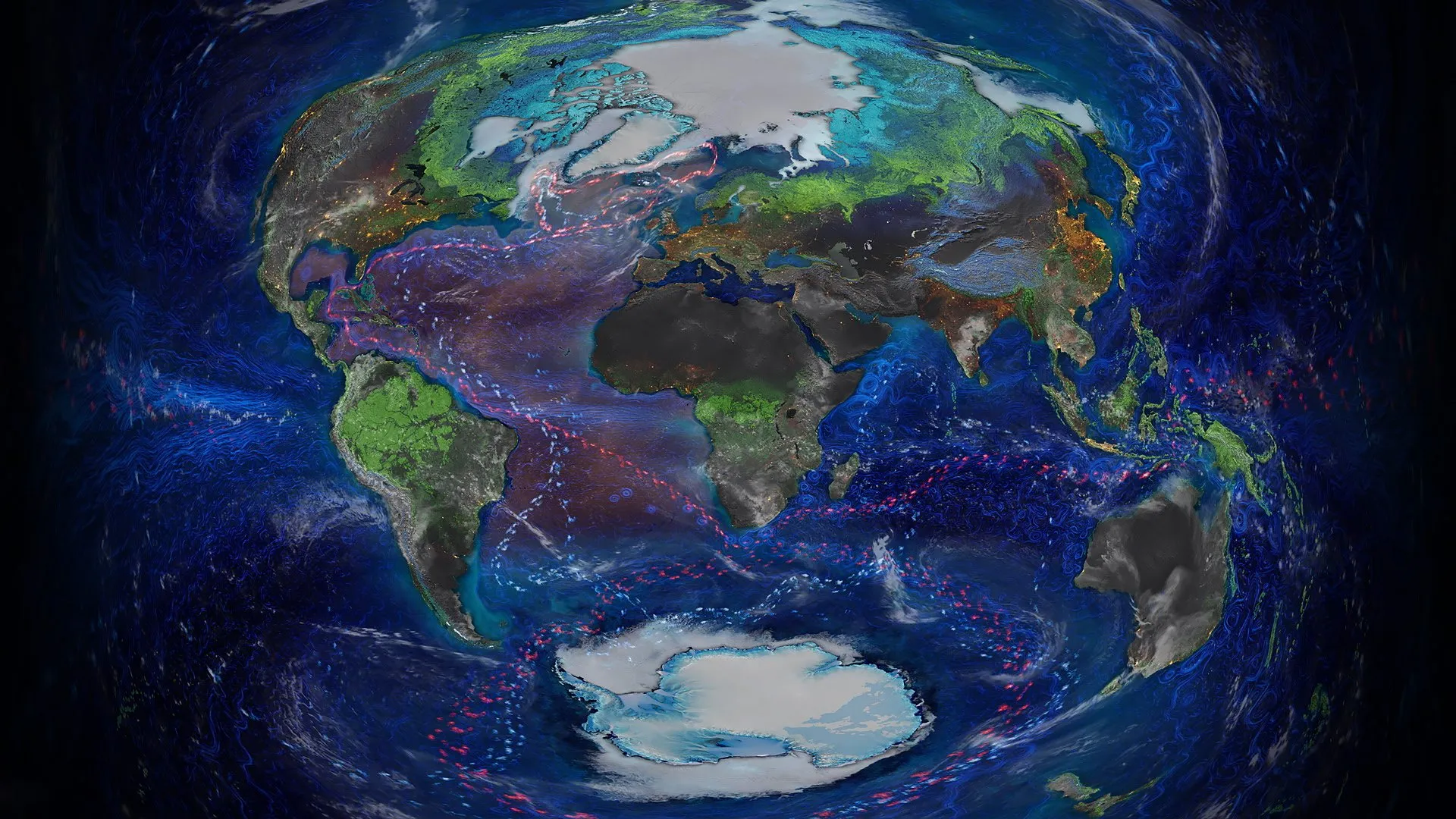
Connected Earth — Interconnected planetary systems
References
Rockström, J., Denton, F., Norström, A.V. et al. Charting a transformational course toward a safe and just future: The Earth Commission’s contribution. Earth’s Future 14, e2025EF006976 (2026). https://doi.org/10.1029/2025EF006976
Gupta, J., Liverman, D., Prodani, K. et al. Earth system justice needed to identify and live within Earth system boundaries. Nature Sustainability 6, 630–638 (2023). https://doi.org/10.1038/s41893-023-01064-1
Rockström, J., Gupta, J., Qin, D. et al. Safe and just Earth system boundaries. Nature 619, 102–111 (2023). https://doi.org/10.1038/s41586-023-06083-8
Gupta, J., Bai, X., Liverman, D.M. et al. A just world on a safe planet: a Lancet Planetary Health–Earth Commission report on Earth-system boundaries, translations, and transformations. The Lancet Planetary Health 8, e1134–e1177 (2024). https://doi.org/10.1016/S2542-5196(24)00042-1
Rockström, J. et al. A safe operating space for humanity. Nature 461, 472–475 (2009). https://doi.org/10.1038/461472a
Rammelt, C.F. et al. Impacts of meeting minimum access on critical earth systems amidst the Great Inequality. Nature Sustainability 6, 212–221 (2022). https://doi.org/10.1038/s41893-022-00995-5